Flood and Landslide Deaths Rise in Nepal's Phidim District
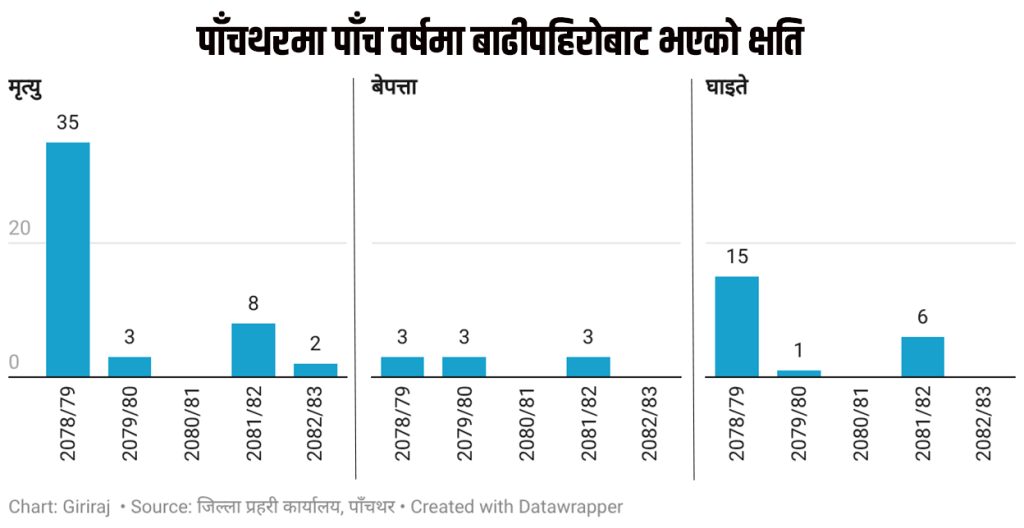
In Nepal's Phidim district, 48 people have died and 9 remain missing due to floods and landslides over the past five years. This ongoing devastation is linked to changing rainfall patterns attributed to climate change. Despite the recurring disasters, long-term preparedness measures and infrastructure development aimed at reducing risks remain insufficient. The frequency and intensity of such events highlight a critical need for more robust and proactive mitigation strategies within the region. Local authorities and communities face significant challenges in adapting to these environmental shifts and protecting lives and property.
The increasing frequency of flood and landslide events in Phidim, Nepal, underscores the growing vulnerability of communities to climate change impacts. The insufficient long-term preparedness and infrastructure development suggest a systemic gap between disaster recognition and effective risk mitigation investment. This situation highlights a common challenge globally, where adaptation strategies often lag behind the accelerating pace of environmental change. Future resilience will likely depend on integrating climate-informed planning into all levels of development, fostering stronger inter-agency coordination, and prioritizing community-based early warning systems to bridge the gap between potential hazards and actionable preparedness.
AI-generated to prompt reflection — not editorial opinion, not advice, not a statement of fact. How this works.