Flooding Disrupts Chittagong-Cox's Bazar Highway After Rail Line Submergence
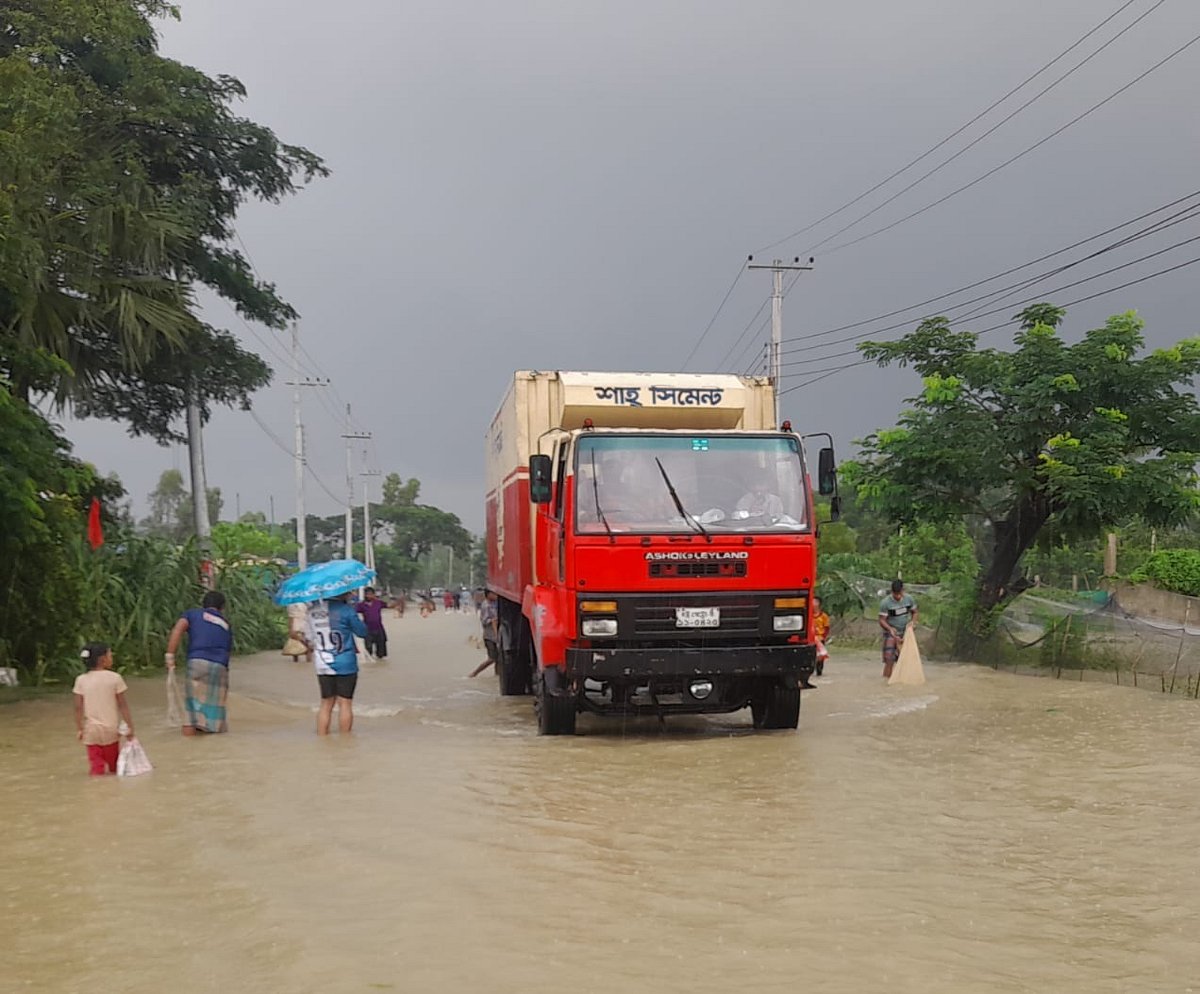
Heavy rainfall and upstream runoff have caused the Chittagong-Cox's Bazar highway to flood, following a similar inundation of the railway line earlier this week. The flooding occurred on Thursday morning in the Pathanipul area of Chandanaish Upazila, with local residents reporting the road submerged under two to two-and-a-half feet of water over a stretch of approximately 500 meters. This incident comes after the railway line near Muradpur in Chittagong city was submerged on Tuesday, leading to the suspension of train services on the Chittagong-Cox's Bazar route. The Officer-in-Charge of Dohazari Highway Police, Salauddin Chowdhury, confirmed that water has been flowing over the highway since Thursday morning due to the heavy monsoon rains and mountain runoff. While long-distance buses and other vehicles are navigating the flooded section with extreme caution, highway police are present to manage traffic and assist pedestrians. A witness, Sajjad Hossain, described encountering strong currents flowing over the highway for about half a kilometer, forcing some vehicles to refuse passage and requiring him to walk through waist-deep water, a journey that took him approximately 30 minutes. The Chandanaish Upazila Nirbahi Officer, Abdur Rahman, stated that the continuous rain and mountain runoff have left about 15,000 people waterlogged in various unions and wards of Chandanaish and Dohazari since Wednesday night. He expressed optimism that the situation will improve once the rainfall subsides and the water levels from the hills recede.
The recurring flooding of critical transportation infrastructure, including both rail and road networks connecting Chittagong and Cox's Bazar, highlights the vulnerability of the region to extreme weather events exacerbated by upstream water flows. This pattern suggests a need for a systemic review of regional infrastructure resilience, considering the increasing frequency and intensity of monsoonal rains, potentially linked to broader climate shifts. Future planning must integrate advanced hydrological modeling and robust engineering solutions to mitigate such disruptions, ensuring economic continuity and public safety. The event underscores the interconnectedness of environmental factors, infrastructure integrity, and regional development, demanding proactive adaptation strategies rather than reactive responses to prevent future economic and social impacts.
AI-generated to prompt reflection — not editorial opinion, not advice, not a statement of fact. How this works.