Floods Devastate Diamer District in Gilgit-Baltistan, Damaging Infrastructure and Property
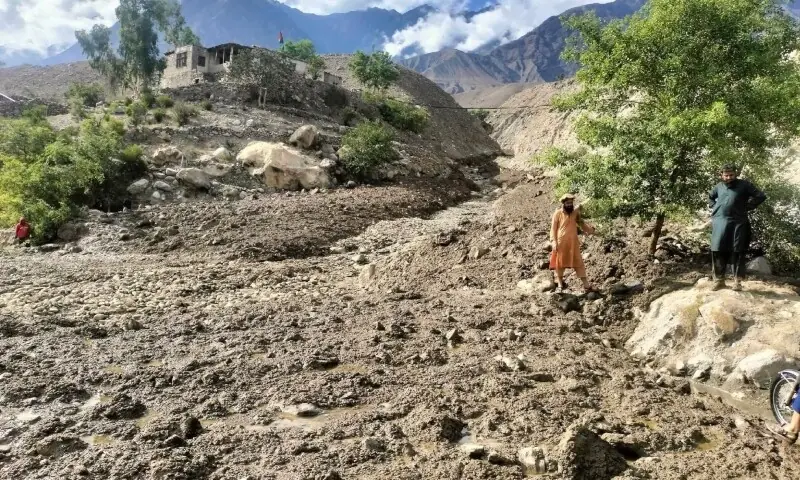
Flash floods, exacerbated by heavy rainfall and attributed to climate change, have caused significant destruction across multiple locations in Diamer district, Gilgit-Baltistan. The deluge, which occurred early Monday, inundated six areas including Khanbari, Niyat, Thore, Gaspayan, Gasbala, and Bunar. The floods damaged numerous houses, the vital Karakoram Highway (KKH), and crucial link roads connecting remote communities. Agricultural land, standing crops, and fruit trees, particularly in the Thore Valley's Thunraka area, suffered severe damage. The main road in Thore Valley was washed away, halting all traffic, and power transmission lines were also disrupted, leaving thousands without electricity. In Niyat, link roads were damaged, impeding transportation for local residents. A private company involved in the Diamer-Bhasha Dam project reported substantial losses, with 13 dumpers, an excavator, a crushing plant, and two water tankers swept away, halting development activities. Landslides and debris blocked the KKH at Bonar Das, leading to long vehicle queues and stranding tourists. While KKH traffic was eventually restored, many link roads and power supplies remain out of service. Residents are appealing to government authorities for immediate relief, infrastructure repair, and financial aid. Experts highlight Gilgit-Baltistan's increasing vulnerability to climate change-induced disasters like cloudbursts, flash floods, landslides, and glacial lake outburst floods (GLOFs), which are occurring with greater frequency and posing long-term threats to water security and livelihoods.
The events in Diamer underscore the escalating impact of climate change on fragile mountain ecosystems and the critical infrastructure supporting regional development and tourism. The repeated destruction of roads and power lines highlights systemic vulnerabilities in disaster preparedness and resilience, particularly concerning the downstream effects of accelerated glacier melt and increased extreme weather events. The damage to the Diamer-Bhasha Dam project's equipment also points to the complex interplay between development initiatives and environmental hazards in such regions. Future planning must integrate advanced climate modeling and robust infrastructure design to mitigate risks, ensuring that essential services and economic activities are not perpetually disrupted by natural disasters. Addressing these challenges requires a sustained, multi-stakeholder approach focused on long-term adaptation strategies and ecosystem preservation.
AI-generated to prompt reflection — not editorial opinion, not advice, not a statement of fact. How this works.