Foreign Leaders Attend Funeral for Iran's Former Supreme Leader Ali Khamenei
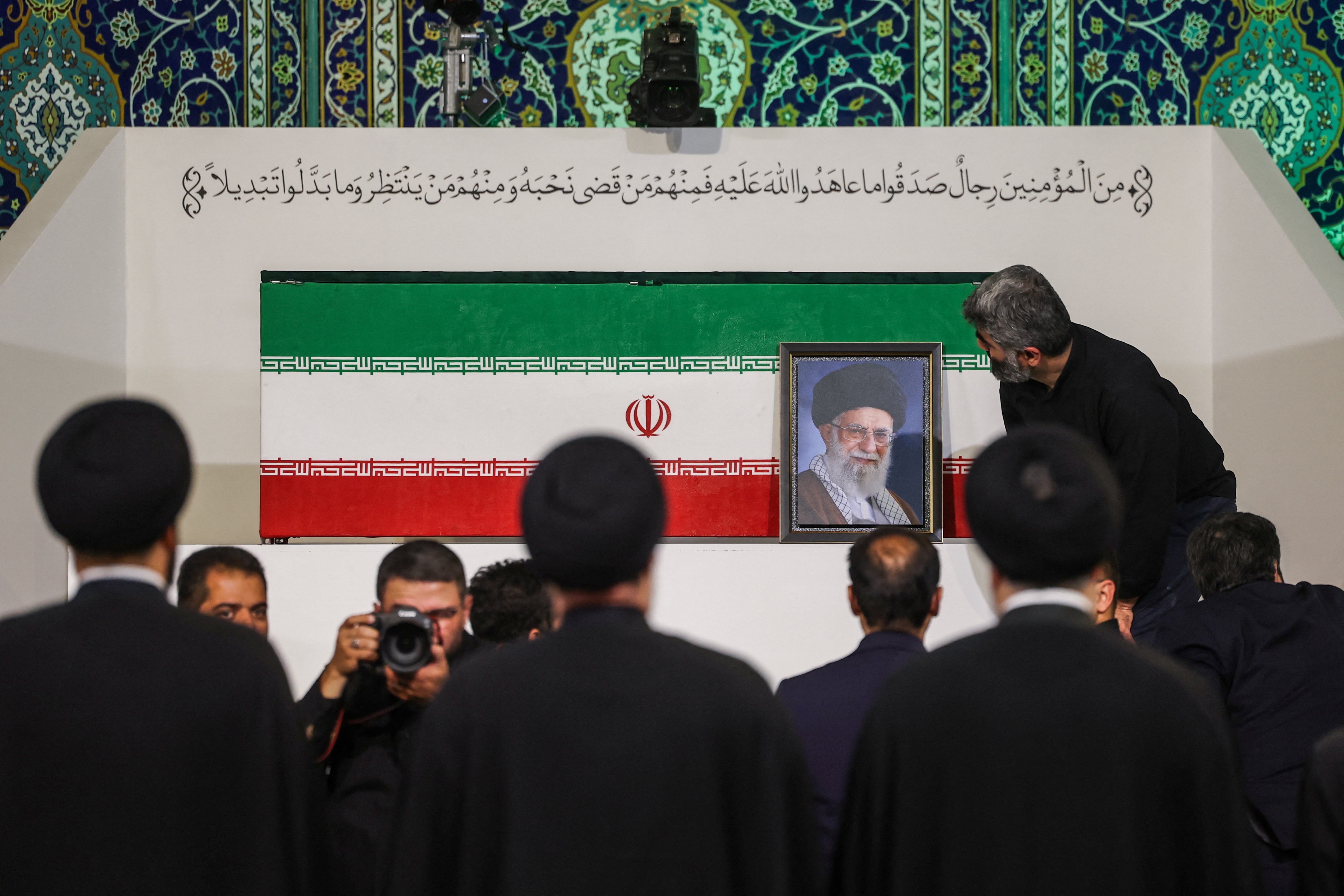
The funeral for Iran's former Supreme Leader, Ali Khamenei, commenced on Friday, July 3, 2026, in Tehran with a private ceremony for government officials and foreign state leaders. The coffin of the late leader was displayed during the event. Several international dignitaries were present to pay their respects. Attendees included Pakistan's Prime Minister Shebaz Sharif, Armenia's Prime Minister Nikol Pashinyan, and Georgia's President Mikheil Kavelashvili. Iraq was represented by President Nizar Amidi and Prime Minister Ali al-Zaidi. Dmitry Medvedev, Vice President of Russia's Security Council, also attended. Other notable figures present were Tajikistan's President Emomali Rahmon, Saudi Arabia's Vice Minister of Foreign Affairs Waleed bin Al-Khereiji, Afghanistan's Foreign Minister Amir Khan Muttaqi, and the President of the Iraqi Kurdistan, Nechirvan Barzani. Additionally, Sahiba Gafarova, Speaker of the Parliament of Azerbaijan, Igor Sergeyenko, Speaker of the House of Representatives of Belarus, Hafiz Uddin Ahmad, Speaker of the Parliament of Bangladesh, and Nicaragua's Foreign Minister Valdrack Whitaker were in attendance. Notably, the Iranian government did not extend invitations to any European or United States officials for the funeral.
The attendance of various international leaders at the funeral of Iran's former Supreme Leader Ali Khamenei highlights the complex geopolitical landscape and the strategic importance Iran holds on the global stage. The absence of European and US officials suggests ongoing diplomatic tensions and differing foreign policy alignments. The presence of leaders from countries like Russia, Pakistan, and regional neighbors indicates a continued effort by Iran to foster relationships and project influence, particularly in the absence of Western engagement. This event underscores the persistent dynamics of international relations, where state funerals can serve as platforms for both diplomatic signaling and the reinforcement of existing alliances or rivalries, shaping perceptions of Iran's international standing and future foreign policy direction.
AI-generated to prompt reflection — not editorial opinion, not advice, not a statement of fact. How this works.