Foreign Student Enrollment Declines in Bangladesh's Medical Colleges
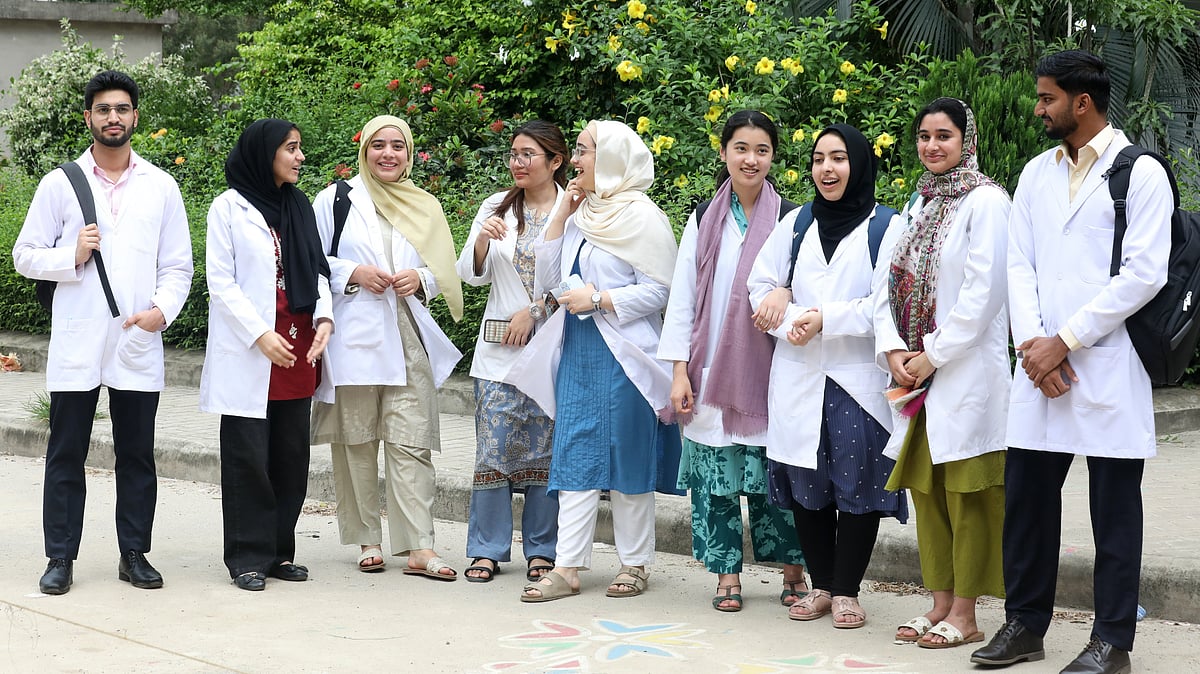
The number of foreign students pursuing medical education in Bangladesh has seen a significant decrease over the past two years. While private medical colleges previously attracted a substantial influx, with 1,747 students in the 2020-21 academic year, this figure dropped to 1,187 in the 2024-25 academic year. Government medical colleges, which offer limited seats through SAARC and non-SAARC quotas, generally maintain a steady enrollment, with most allocated seats being filled. However, even these institutions have not seen an increase in foreign student admissions. Students from India and Nepal constitute a large portion of the foreign cohort, alongside those from Bhutan, Pakistan, Sri Lanka, Maldives, and Palestine. Some students also come from the USA and Canada, primarily being expatriate Bangladeshis. Factors contributing to this decline are multifaceted, including global circumstances, the rising value of the US dollar, and potential diplomatic shifts with India. Additionally, increased medical education opportunities in Nepal and the Maldives, coupled with aggressive recruitment by agencies in countries like Russia and China, are diverting students. These agencies are leveraging political instability in Bangladesh to promote alternative destinations. While Bangladesh offers competitive tuition fees, ranging from $5,000 annually for government colleges (non-SAARC) to $35,000-$45,000 for private institutions, these financial incentives are apparently not enough to counteract the declining trend. The Bangladesh Private Medical College Association (BPMCA) is actively seeking to reverse this trend through international education fairs in countries like Maldives, Nepal, Indonesia, Malaysia, and Sri Lanka, aiming to rebrand Bangladesh as an attractive medical education destination.
The declining enrollment of foreign medical students in Bangladesh presents a complex interplay of economic, geopolitical, and educational factors. While Bangladesh has historically offered a cost-effective alternative for medical education, particularly for students from neighboring countries, the current trend suggests that external market dynamics and shifting regional educational landscapes are increasingly influential. The appreciation of the US dollar against the Bangladeshi Taka likely increases the effective cost for foreign students, while the expansion of medical programs in countries like Nepal and the Maldives directly competes for the same student pool. Furthermore, the mention of political instability as a deterrent highlights the importance of a stable and predictable environment for attracting international students, who often rely on long-term planning and financial commitments. The BPMCA's efforts to market Bangladesh abroad are a necessary step, but a comprehensive strategy would also need to address internal factors such as the quality of infrastructure, faculty development, and the overall student experience to ensure long-term competitiveness in the global medical education market.
AI-generated to prompt reflection — not editorial opinion, not advice, not a statement of fact. How this works.