Former Coordinator Details 'One-Point Demand' Decision-Making Amidst July Uprising
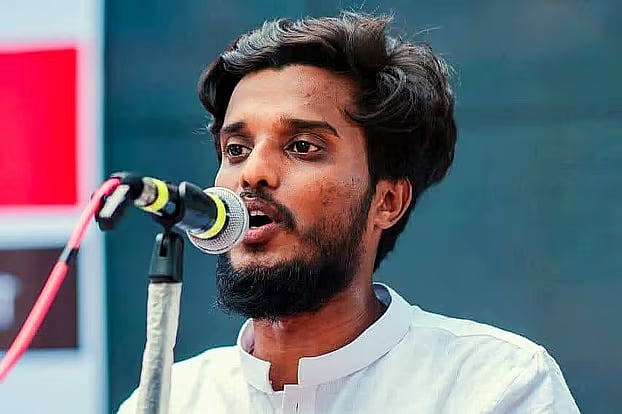
Abdul Qader, a former coordinator of the anti-inequality student movement, has revealed the behind-the-scenes history of how the 'one-point demand' was formulated during the July mass uprising. The movement's peak was on August 3, 2024, at Dhaka's Central Shaheed Minar, where the one-point demand for the fall of the then-Sheikh Hasina government and the end of fascism was announced by Nahid Islam, the primary coordinator. Two days later, Prime Minister Sheikh Hasina fled to India. Following the uprising, various accounts and debates emerged regarding the formulation of the one-point demand and the credit due to different individuals. Qader's detailed Facebook post addresses the roles of leaders and activists from various political parties and several journalists in reaching the one-point decision. He also discussed the activities of Nahid Islam, Rifat Rashid, Abdul Hannan Masud, and Mahin Sarkar, alongside Mahfuz Alam, who later became an advisor to the interim government. Qader described a heated exchange on August 1, 2024, between himself and some of the six coordinators released from DB custody, regarding the announcement of the next day's program. A decision was made to hold an online meeting after Friday prayers on August 2 to resolve the dispute and plan further. During this online meeting, attended by leaders of the then-democratic student power, the primary agenda was whether to continue the movement, with the majority voting to proceed. A secondary decision was that Qader, Masud, Rashid, and Sarkar would lead the movement for the next three to four days, with senior leaders participating later. Qader conveyed his concerns and those of Rifat about the one-point demand to the senior leaders, highlighting public support from professionals, academics, lawyers, and artists, as well as Professor Salimullah Khan's call for the government's resignation. The consensus from this discussion was to observe for another seven to ten days before reaching a one-point decision, while also deciding to announce a civil disobedience program for the following day, August 3. Qader also mentioned informing leaders from Jatiyatabadi Chhatra Dal and Islami Chhatra Shibir about the one-point demand, receiving positive responses and commitments to consult with their respective parties. He emphasized that he would only proceed with the one-point demand if his three fellow coordinators—Rashid, Sarkar, and Masud—agreed, as he couldn't do it alone. However, these three stated that the decision rested with the senior coordinators, Nahid and Asif Mahmud, who had been released from DB custody. Qader urged them to proceed with the one-point demand, citing the risk of further casualties if the situation continued for another week or ten days, and also mentioning information that the government might accept the nine-point demand deceptively. Ultimately, Rashid, Sarkar, and Masud agreed to the one-point demand, and a draft declaration was prepared. However, at the last moment, Rashid and the others withdrew their support, citing Nahid Islam's assurance that the senior leadership would announce the one-point demand. This sudden change of heart left Qader and his allies stunned, as all preparations were complete based on their prior agreement. Qader also referenced a previous interview where Nahid Islam stated that pressure was applied to announce a one-point demand on the night of August 2, which he perceived as a trap to prolong fascism, and that they insisted the announcement come from the ground.
This account details the complex internal negotiations and shifting alliances among protest movement coordinators leading up to a significant political demand. The narrative highlights the challenges of decentralized leadership, where individual coordinators, influenced by external political parties and perceived government strategies, can alter the course of collective action. The tension between immediate action and strategic patience, as well as the influence of senior versus junior leadership, are central themes. From a systems perspective, the event underscores the fragility of consensus-building in dynamic political environments and the potential for critical decisions to be swayed by last-minute assurances or perceived threats, even after extensive deliberation and preparation. The differing perspectives on the timing and origin of the 'one-point demand' suggest a need for clearer communication protocols and decision-making frameworks within such movements to ensure unified action and avoid internal discord, particularly when facing significant state pressure or potential government concessions.
AI-generated to prompt reflection — not editorial opinion, not advice, not a statement of fact. How this works.
