Former Hospital Cleaner Graduates as Doctor After Six Years of Study
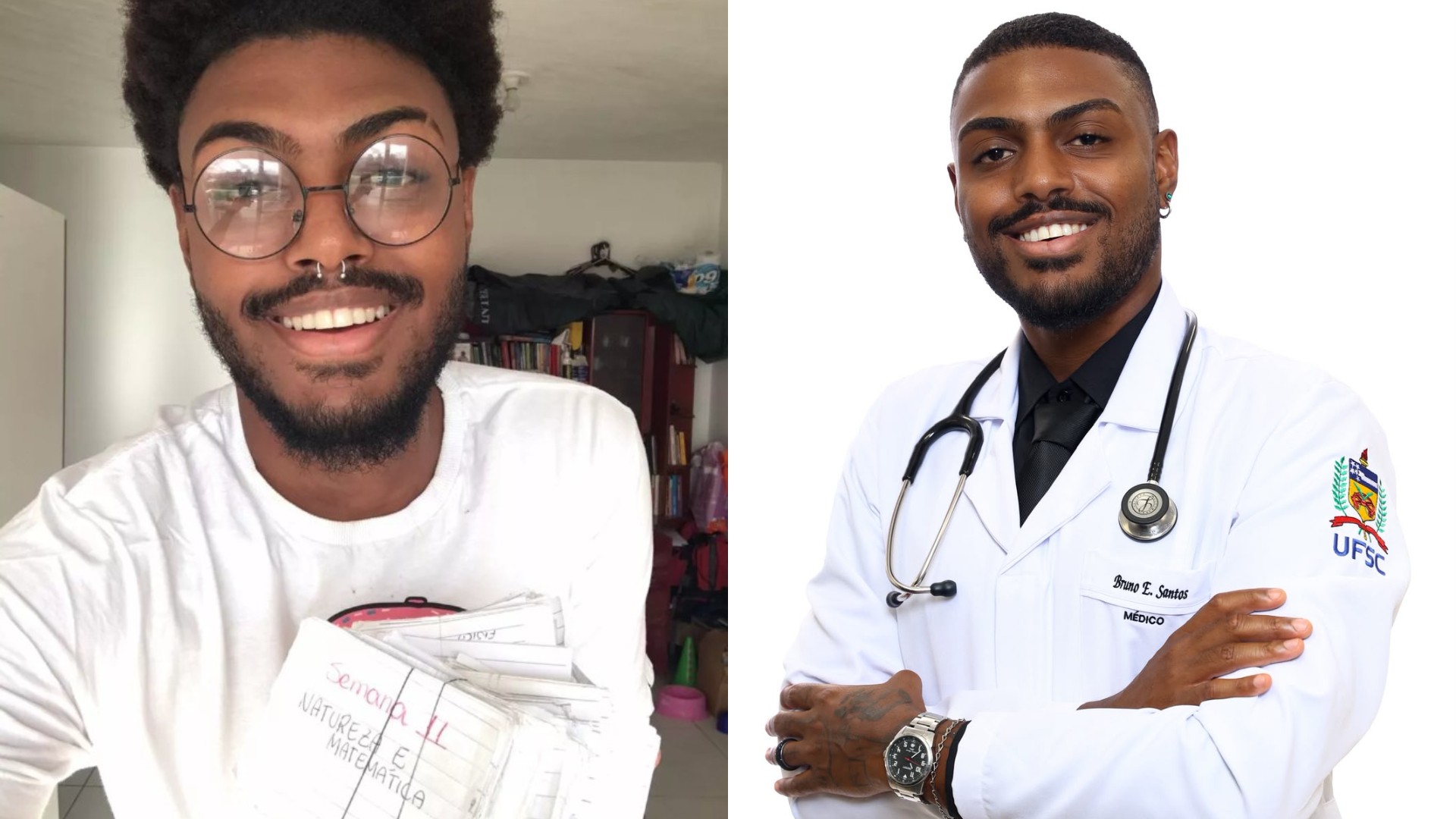
Bruno Eulálio Santos, a 27-year-old former hospital cleaner, has graduated with a medical degree from the Federal University of Santa Catarina (UFSC) on Sunday, December 12th. Santos previously worked in a car wash in Contagem, Minas Gerais, before moving to Santa Catarina. His journey into medicine began while working as a cleaner in a private hospital in Balneário Camboriú in early 2018, where observing the medical routine sparked his interest. To prepare for the demanding university entrance exams, Santos developed a unique study method using over 1,300 custom-made flashcards, designed to be pocket-sized and including practical tips and motivational messages. He juggled work and studies, often utilizing his commute time on the bus to review material. After his hospital contract ended in March 2019, he dedicated two years to intensive study, supported by his sister, eventually gaining admission to UFSC's medical program through the Sisu selection process in 2020. The COVID-19 pandemic presented additional challenges, with the initial semesters conducted online, impacting his mental and physical health. Santos adapted his flashcard method, transitioning to digital applications which offered better organization and spaced repetition, significantly simplifying his learning process. He also found ways to monetize his study techniques by creating content for social media and partnering with a preparatory course, earning income to support himself through university. Despite the immense difficulty, which he described as 'very, very hard' and requiring significant sacrifices, including neglecting physical activity and mental well-being, Santos persevered. He acknowledged receiving support from UFSC's student assistance policies at one point. Now graduated, Santos plans to work in the medical field, with aspirations to specialize in cardiology or psychiatry.
This narrative highlights the transformative power of educational access and personalized learning strategies. Santos's journey underscores the significant barriers faced by individuals from lower socioeconomic backgrounds in pursuing higher education, particularly in competitive fields like medicine. His innovative use of flashcards, evolving from physical cards to digital tools, demonstrates adaptive learning and resourcefulness. The story also implicitly critiques systems that require individuals to undertake immense personal sacrifice to achieve educational goals, suggesting a need for more robust support structures. Looking ahead, the integration of digital learning tools and the potential for individuals to leverage their unique study methods for income generation point to evolving educational and economic landscapes. The narrative prompts consideration of how educational institutions can better support students facing similar challenges, ensuring that talent is not limited by circumstance.
AI-generated to prompt reflection — not editorial opinion, not advice, not a statement of fact. How this works.