Former PM Khanal Praises CPC's Ideological Clarity and Discipline
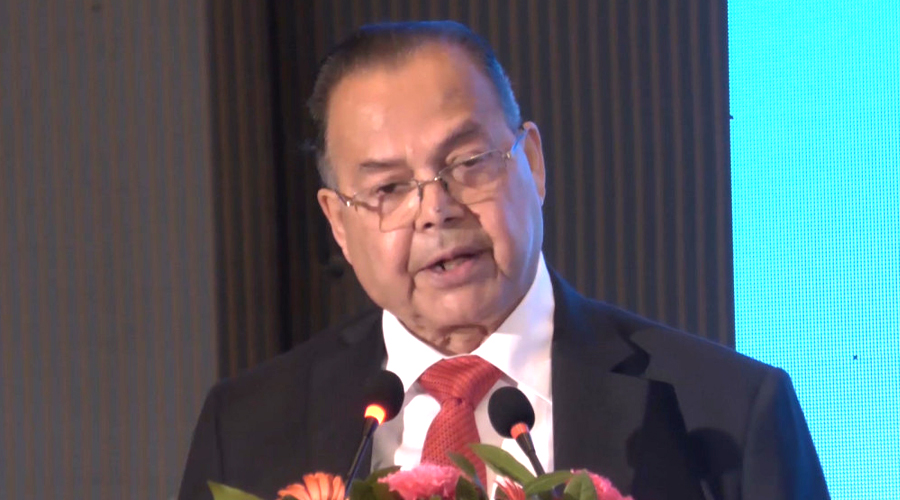
Former Prime Minister and senior leader of the Communist Party of Nepal, Jhalanath Khanal, stated that the Chinese Communist Party's (CPC) historical experience, ideological clarity, and political discipline are exemplary for Nepal's development and prosperity. Speaking at a discussion forum titled '105 Years of the Chinese Communist Party: Historical Experience and Nepal's Development,' Khanal highlighted the CPC's contributions. He emphasized that any party and its progress are deeply intertwined with its ideological foundation and organizational discipline. Khanal suggested that Nepal could learn from the CPC's approach to governance and national development. The event focused on the CPC's long history and its relevance to Nepal's own developmental aspirations. The discussion aimed to draw parallels and potential lessons from China's economic and social progress under the CPC's leadership. Khanal's remarks underscore a perspective that emphasizes learning from established political models for national advancement.
Former Prime Minister Jhalanath Khanal's commendation of the Chinese Communist Party's (CPC) ideological clarity and political discipline offers a perspective on international political models for national development. This viewpoint suggests that adherence to a defined ideology and strong party discipline can be a pathway to achieving national progress and prosperity. Examining such claims requires considering the diverse factors that contribute to a nation's development, including economic policies, global geopolitical contexts, and internal societal dynamics. The CPC's long tenure and China's economic transformation present a case study, but it is crucial to analyze the specific mechanisms and potential trade-offs associated with this model. Understanding the incentives and governance structures that have driven China's growth, while also acknowledging different political and economic systems, provides a more comprehensive picture for policy considerations.
AI-generated to prompt reflection — not editorial opinion, not advice, not a statement of fact. How this works.