Former Polish PM Morawiecki Forms New Faction After PiS Party Split
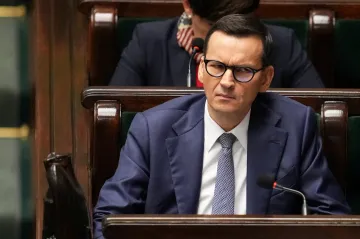
Former Polish Prime Minister Mateusz Morawiecki announced on Wednesday the formation of a new parliamentary faction comprising forty lawmakers. This development follows a significant rift within the Law and Justice (PiS) party concerning the future direction of the main Polish opposition force. Morawiecki stated that he remains in opposition, describing the current government led by Prime Minister Donald Tusk as "terrible," according to the PAP agency. The dispute between Morawiecki and PiS leader Jarosław Kaczyński has reportedly also divided the party's voters, according to opinion polls. The emergence of this new faction signals a potential realignment within Poland's political landscape, particularly among conservative and nationalist voters. The PiS party, which has been a dominant force in Polish politics for years, now faces internal division that could impact its effectiveness as an opposition. The long-standing leadership struggle between Morawiecki and Kaczyński appears to have reached a critical juncture, leading to this formal separation. The implications for future Polish elections and the stability of the current Tusk government remain to be seen, but this split introduces a new dynamic.
The formation of a new parliamentary faction by Mateusz Morawiecki, following internal disagreements within the Law and Justice (PiS) party, highlights the inherent challenges of maintaining party unity, especially after a period out of government. Political parties often experience internal realignments as leadership aspirations and strategic visions diverge. This event underscores the dynamic nature of political power structures, where the departure of influential figures can reshape the opposition's landscape. Future electoral outcomes may be influenced by how these factions coalesce or compete, potentially impacting policy debates and governance effectiveness over the next decade. The situation invites scrutiny of leadership succession mechanisms and ideological cohesion within established political movements.
AI-generated to prompt reflection — not editorial opinion, not advice, not a statement of fact. How this works.