Former Supreme Court Justice Questions Legality of Police Lathi Charge Without Nameplates
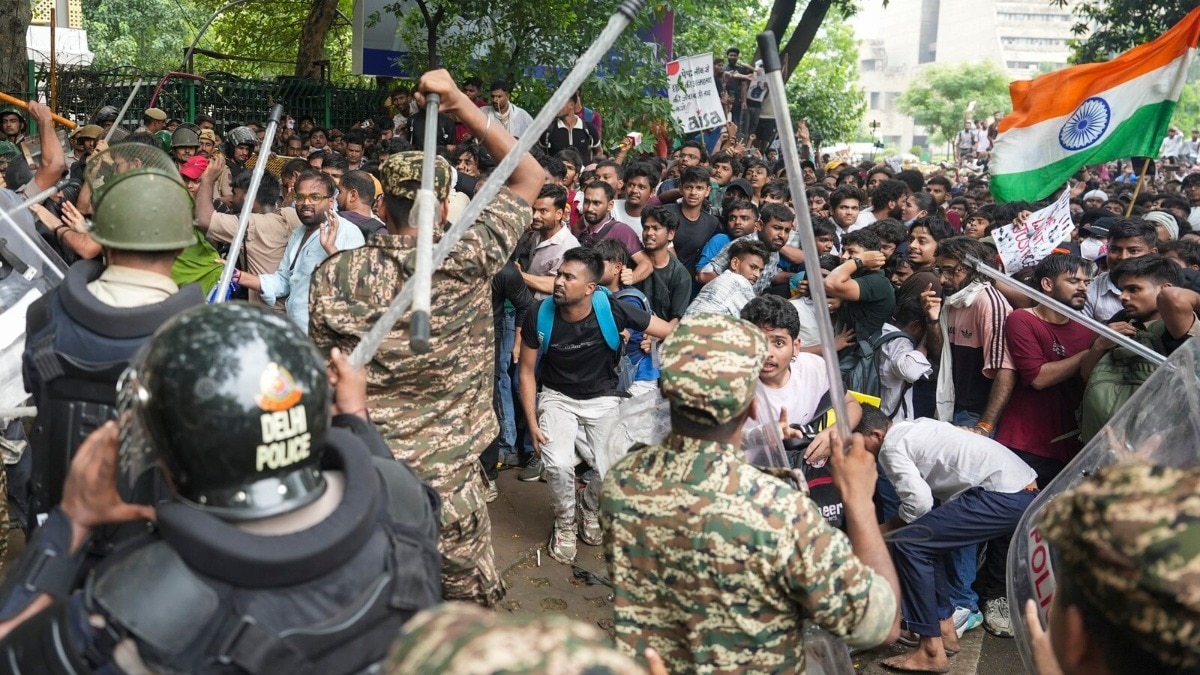
A former Supreme Court Justice has raised concerns regarding the legality of a police lathi charge that occurred on July 20 during a protest by students. The incident involved clashes between police and students during a 'Sansad Chalo' (March to Parliament) movement organized by the Campaign for Judicial Accountability and Reforms (CJAR). Several videos circulating online show police personnel, some in plainclothes and without nameplates, wielding batons against the protesters. This action by the Delhi Police has drawn public scrutiny and questions about the adherence to proper procedures during crowd control. The former justice's intervention highlights potential issues with accountability and transparency when law enforcement officers do not clearly identify themselves during operations.
The incident raises questions about police accountability and adherence to established protocols during protests. The absence of nameplates and the use of plainclothes by officers involved in a lathi charge can obscure identification, potentially hindering investigations into misconduct and eroding public trust. This practice may conflict with principles of transparency and due process, particularly in democratic societies where law enforcement is expected to operate visibly and accountably. Future considerations should focus on strengthening identification requirements for officers engaged in crowd management to ensure both public safety and the protection of civil liberties, aligning with evolving expectations for state authority in the digital age.
AI-generated to prompt reflection — not editorial opinion, not advice, not a statement of fact. How this works.