Four found dead in car amid Spain's severe wildfires; 12 confirmed dead overall
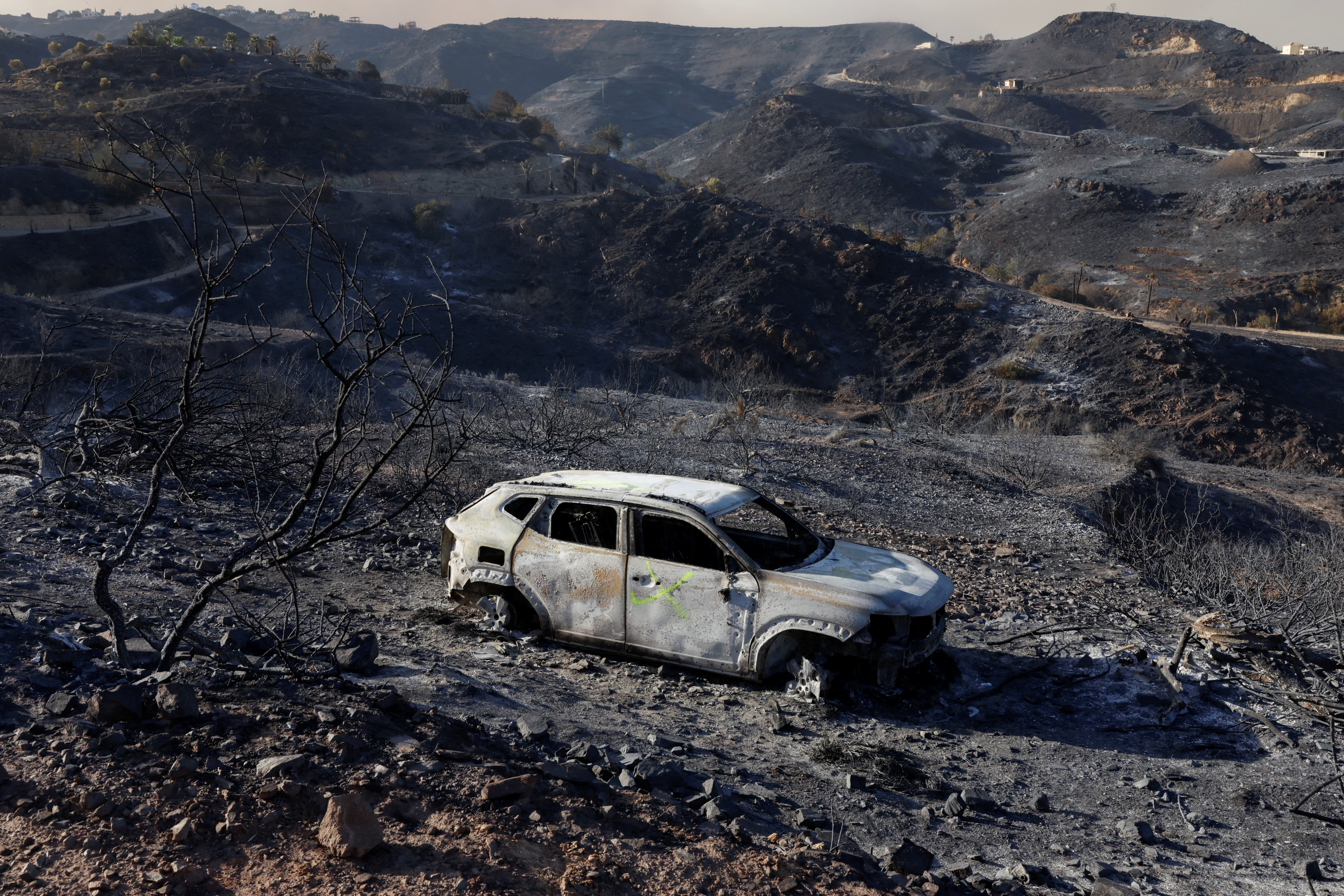
Four individuals were discovered carbonized inside a vehicle engulfed by a wildfire in the Almería region of Andalusia, southern Spain. Authorities believe the victims were British, as the car had a right-hand drive. This tragic discovery is part of a larger wildfire incident that has claimed a total of 12 lives. Eight other individuals were found deceased after apparently abandoning their vehicles and attempting to flee the flames on foot. The fire ignited on Thursday in the Los Gallardos area, a rugged terrain with ravines and scattered homes, which complicated escape efforts for residents and tourists. Many foreign nationals, including Britons and Belgians, reside in this region, drawn by its climate and tranquility. Local officials and police conducted door-to-door warnings, advising safe evacuation routes or instructing residents to remain in their homes, depending on the evolving situation. Despite these warnings, some residents of Bédar, a village initially advised to stay put, chose to leave and encountered the fire. The regional president, Juanma Moreno, emphasized the critical importance of following official recommendations, noting how wind changes can rapidly alter fire direction. He stated that the village of Bédar was largely spared due to residents heeding the stay-at-home order, contrasting with the fate of those who attempted to flee. The fire, which has devastated 3,150 hectares and displaced 600 people, is suspected to have started from a broken electricity cable in a ditch, rapidly fanned by strong winds. Over 400 emergency personnel are engaged in combating the blaze, with weather conditions on Saturday potentially aiding their efforts. Twenty-three people remain unaccounted for in what is described as one of Spain's most severe wildfires in years.
This incident highlights the critical challenges in managing wildfire evacuations, particularly in areas with mixed residential populations and complex terrain. The communication strategy, relying on door-to-door notifications and varying instructions based on micro-locations, proved insufficient for some, leading to tragic outcomes. The analysis points to a systemic issue in disaster communication protocols: while personalized, on-the-ground efforts were made, the absence of broader, immediate alerts like text messages for all affected villages suggests a gap in scalable emergency response. The event underscores the need for integrated, multi-channel warning systems that can reach diverse populations rapidly, especially when faced with unpredictable environmental factors like shifting winds. Future preparedness must consider how to balance local discretion with universal, timely alerts to mitigate risks associated with individual decision-making during rapidly evolving crises.
AI-generated to prompt reflection — not editorial opinion, not advice, not a statement of fact. How this works.