Four Types of Black Holes Identified, Challenging Cosmic Understanding
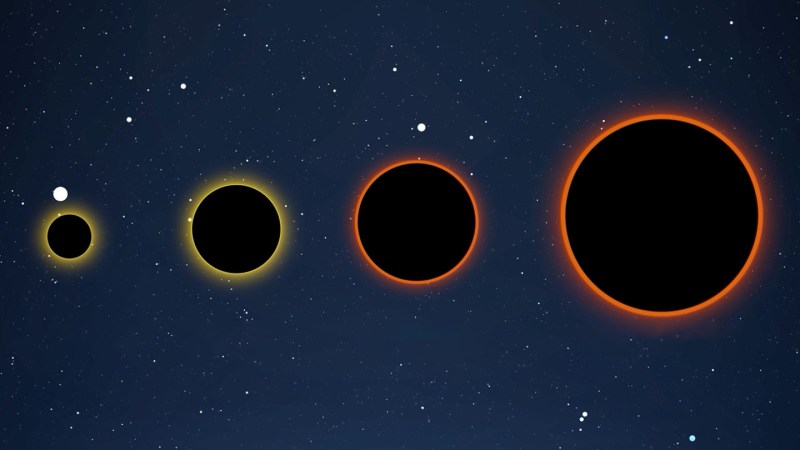
Scientists have identified four distinct types of black holes, primarily categorized by their varying masses. These enigmatic cosmic entities continue to push the boundaries of our comprehension of the universe. The classification based on mass highlights the diverse nature of these objects, from stellar remnants to supermassive behemoths. Despite ongoing research, black holes remain some of the most mysterious phenomena known, prompting further investigation into their formation, evolution, and impact on spacetime. Their existence challenges fundamental physics and offers unique laboratories for testing theories about gravity and the cosmos. The study of these four types aims to unravel the complex processes that govern their creation and behavior. Understanding these differences is crucial for advancing astrophysical models and our overall view of the universe's structure and history.
The classification of black holes by mass offers a structured approach to studying these extreme astrophysical objects. This categorization aids in understanding the diverse formation pathways and evolutionary histories that lead to different types of black holes. Future research will likely focus on refining these classifications and exploring the underlying physical mechanisms that govern their properties. The ongoing challenge in understanding black holes underscores the limitations of current theoretical frameworks, particularly in reconciling general relativity with quantum mechanics. Continued observation and theoretical development are essential for a more complete picture of these cosmic phenomena and their role in the evolution of galaxies and the universe.
AI-generated to prompt reflection — not editorial opinion, not advice, not a statement of fact. How this works.