Four Workers, Including Business Owner, Die in Irregular Construction Site Landslide
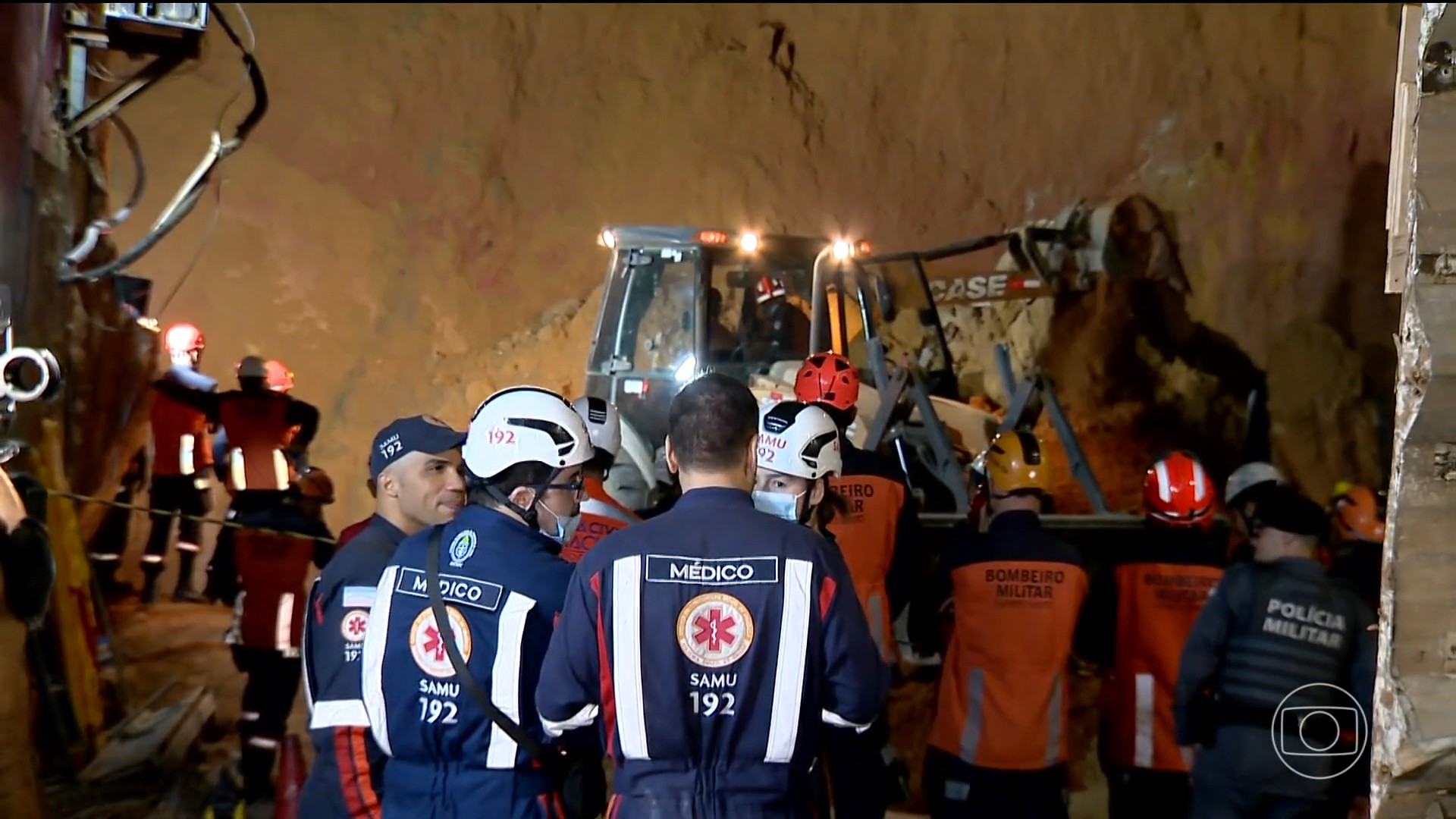
Police are investigating a fatal landslide that occurred during the expansion of a beverage distribution center in Cariacica, Espírito Santo, Brazil, on Friday, May 31st. The accident happened when an embankment collapsed, burying four workers. Among the deceased were the 35-year-old business owner, Vanderson Santana André, and three masons who were also family members: Ronival Moreira de Jesus, Ruan Moreira da Luz, and Valdomiro Moreira de Jesus. Ronival and his son Ruan, along with Ronival's uncle Valdomiro, were working together on the site. The business owner, who had a significant social media following, had posted videos of the ongoing construction hours before the tragedy. The bodies of the four men, aged 31, 32, 48, and 61, were sent to the Forensic Medical Institute for autopsy and were released to their families for burial on Saturday, June 2nd. The Regional Council of Engineering and Agronomy (Crea-ES) had previously warned about the instability of the terrain, especially given the weather conditions, and noted that the construction appeared to be proceeding without technical supervision and with irregularities in the excavation. The municipal government stated that the construction had been embargoed for approximately one year, with an order for immediate cessation of services, and that the owner had resumed work irregularly about a week prior to the collapse. Following the incident, Civil Defense temporarily evacuated and embargoed three properties: the distribution center, an adjacent warehouse, and a building situated above the landslide area, leaving residents displaced.
The tragic loss of life at this construction site highlights critical systemic failures in regulatory oversight and adherence to safety protocols. The reported embargo on the construction and the subsequent resumption of work suggest a breakdown in enforcement mechanisms, potentially driven by economic pressures or negligence. The involvement of family members in the construction, including the business owner, points to a complex interplay of personal investment and risk-taking. Moving forward, the incident underscores the imperative for robust, independent technical supervision of all construction projects, particularly those involving significant earthworks. Future frameworks should incentivize compliance and penalize deviations, ensuring that economic development does not come at the cost of human safety, and that regulatory bodies possess the resources and authority to effectively monitor and enforce safety standards, especially in areas prone to geological instability.
AI-generated to prompt reflection — not editorial opinion, not advice, not a statement of fact. How this works.