France Evacuates Over 63,000 Amid Raging Wildfires; Boats Used for Rescue
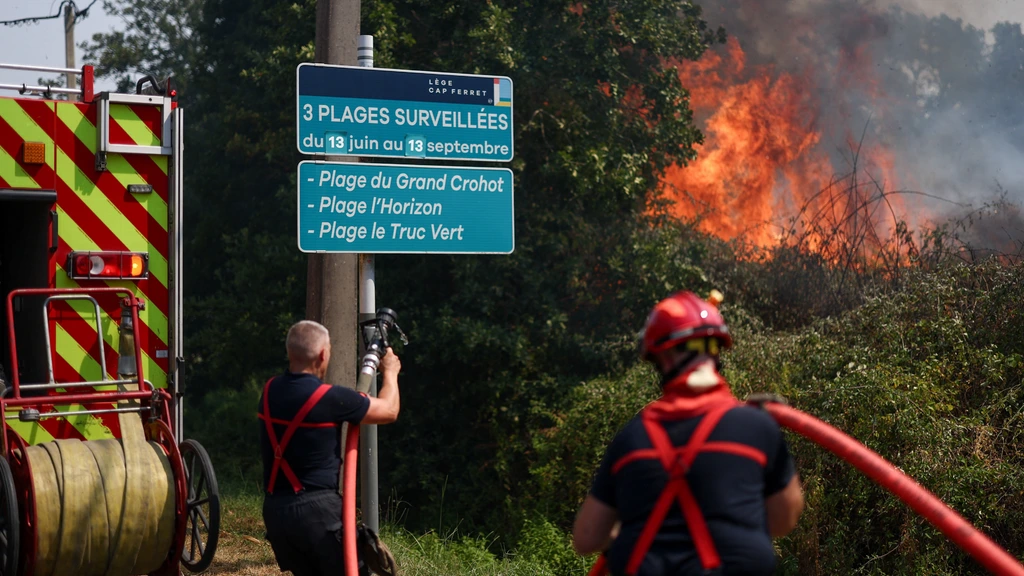
Wildfires in southwestern France have forced the evacuation of over 63,000 people due to two rapidly expanding blazes. On the Cap Ferret peninsula, residents and tourists are being evacuated by boat. The largest fire, which ignited two days ago near Saumos in the Gironde department, has consumed over 10,000 hectares, making it the season's largest wildfire. French Interior Minister Nuñez stated the fire likely started from machinery used to clear a forest path. In Gironde, 40,000 people, including many from campsites and holiday parks, have been evacuated. Hundreds are also being evacuated from the Cap Ferret peninsula via boat, though some oyster farmers remain to protect their stock. The fires have damaged eighty buildings and destroyed fifty, with one firefighter injured and no fatalities reported. A second major fire near Biscarrosse in the Landes department, sparked by a van fire, has led to the evacuation of over 23,000 people and has burned approximately 2,500 hectares, damaging or destroying about a hundred homes. Over 2,000 firefighters, supported by numerous water-bombing aircraft, are battling these blazes, which are spreading rapidly through dry pine forests. President Macron has requested EU assistance, with Croatia, Portugal, the Czech Republic, and Slovakia providing water-bombing planes and helicopters. Meanwhile, Spain is also experiencing widespread wildfires, prompting the government to declare a national state of emergency, with over 11,500 people evacuated there.
The extensive wildfires in France and Spain highlight the increasing vulnerability of European regions to extreme weather events, exacerbated by climate change and land management practices. The reliance on manual evacuations and the strain on firefighting resources underscore the need for proactive, long-term strategies. This includes enhanced early warning systems, improved forest management to reduce fuel load, and potentially rethinking development in high-risk fire zones. The international cooperation for firefighting resources, while commendable, points to a systemic challenge that may require more integrated and pre-emptive cross-border resource allocation mechanisms in the future. The economic and ecological impacts of such widespread destruction necessitate a comprehensive review of disaster preparedness and climate resilience planning across the continent.
AI-generated to prompt reflection — not editorial opinion, not advice, not a statement of fact. How this works.