Francophone Women Parliamentarians Strengthen Feminist Diplomacy in Yaoundé
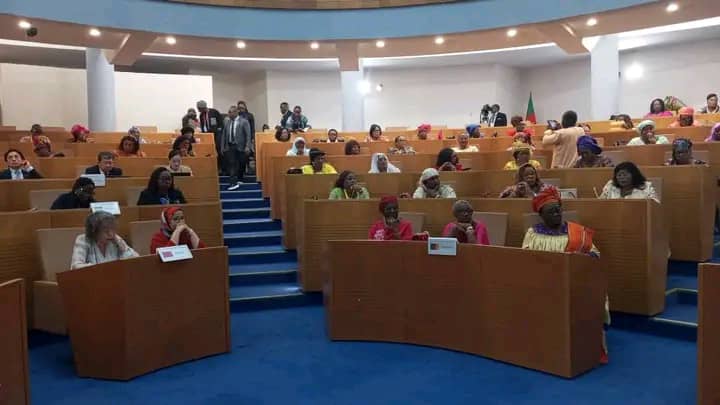
During the 51st Session of the Parliamentary Assembly of the Francophonie (APF) in Yaoundé, the Network of Francophone Women Parliamentarians convened to advance equality, peace, and female leadership. The participants aim to leverage parliamentary diplomacy for more inclusive governance. The meeting, which commenced on July 8, 2026, was presided over by Lydienne Epoube, the Network's First Vice-President. It drew the participation of Cameroonian women ministers and Marie Pierre Raky Chaupin, UN Women's Resident Representative in Cameroon, highlighting institutional support for women's political engagement. Key discussions focused on enhancing young women's civic participation, promoting leadership for equal representation, implementing UN Resolution 1325 on women, peace, and security, and adopting gender-sensitive budgets. Citing the 2026 Global Report by the Inter-Parliamentary Union and UN Women, Chaupin noted that women hold only 27.5% of parliamentary seats globally and 19.9% of parliamentary presidencies, underscoring the need for balanced representation. She emphasized that institutionalizing feminist parliamentary diplomacy positions women not just as conflict victims but as essential actors in peacebuilding. The proceedings are expected to conclude with a declaration reinforcing feminist parliamentary diplomacy in alignment with the "Women, Peace, and Security" agenda.
This gathering highlights a strategic effort by women parliamentarians to formalize a 'feminist parliamentary diplomacy' approach, aiming to integrate gender perspectives into international relations and governance structures. The emphasis on UN Resolution 1325 and gender-sensitive budgeting suggests a focus on systemic change rather than symbolic gestures. However, the persistent global underrepresentation of women in political leadership, as indicated by the cited statistics, points to entrenched structural barriers. Future effectiveness will likely depend on translating these declarations into concrete policy shifts and sustained institutional commitment, particularly in navigating the complex interplay between national governance and international peace and security frameworks. The challenge lies in ensuring this diplomatic framework moves beyond discourse to demonstrably influence resource allocation and conflict resolution.
AI-generated to prompt reflection — not editorial opinion, not advice, not a statement of fact. How this works.