Fraser's Dolphin Rescued After Stranding on São Paulo Beach
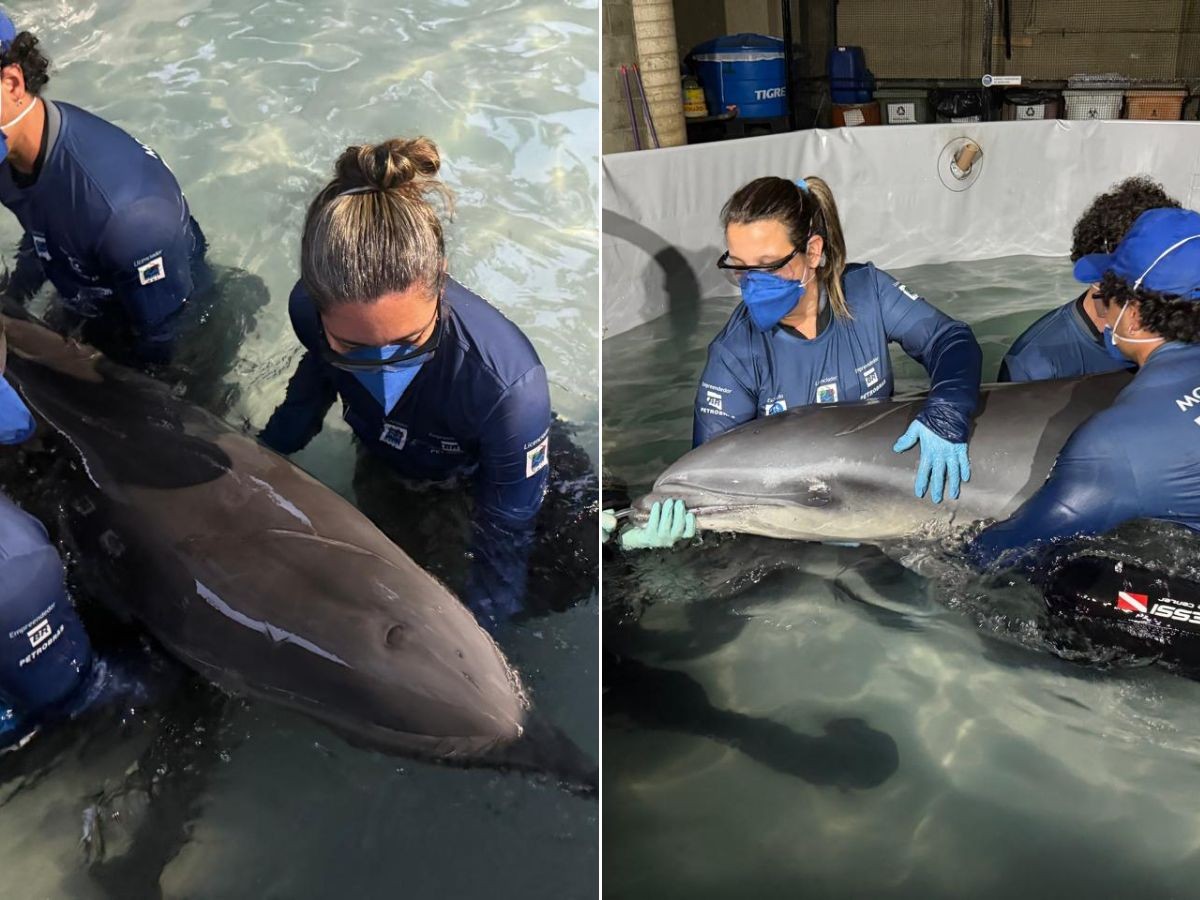
A female Fraser's dolphin was rescued after becoming stranded on the sandy shore of Praia Grande, located on the coast of São Paulo, Brazil. The animal, identified by the Instituto Gremar, exhibited skin lesions, dehydration, emaciation, and severe respiratory distress. Beachgoers discovered the dolphin in the Aviação neighborhood on the afternoon of Wednesday, November 29th, and alerted an on-duty lifeguard. The rescue operation was conducted by Instituto Biopesca, with assistance from the Maritime Firefighters Group (GBMar). Upon arrival at the Instituto Gremar's veterinary hospital in Guarujá, São Paulo, it was determined that the dolphin measured approximately two meters in length and weighed around 110 kilograms. The institute reported that the dolphin is now receiving specialized treatment and is under continuous 24-hour monitoring by veterinary teams to track its health progress. According to Instituto Biopesca, Fraser's dolphins typically inhabit oceanic waters, and this incident marked the first recorded stranding of this species on the beaches of Praia Grande, Mongaguá, Itanhaém, and Peruíbe. The Maritime Firefighters Group reiterated the importance of public safety and marine animal welfare by advising against direct intervention with stranded or distressed marine life, urging prompt notification of competent authorities or nearby lifeguards.
The stranding of a Fraser's dolphin, a species usually found in oceanic waters, on a Brazilian beach highlights potential environmental stressors impacting marine ecosystems. The animal's severe condition suggests underlying health issues, possibly exacerbated by changes in water quality, temperature, or food availability, which are common indicators of broader oceanic health shifts. While rescue efforts are commendable, the repeated strandings of various marine species underscore the need for comprehensive monitoring of coastal and oceanic environments. Understanding the root causes, whether pollution, climate change, or human activity, is crucial for developing long-term conservation strategies and mitigating future events, ensuring the resilience of marine biodiversity in the face of evolving environmental pressures.
AI-generated to prompt reflection — not editorial opinion, not advice, not a statement of fact. How this works.