Freediver Reaches 51 Meters at Fernando de Noronha Shipwreck
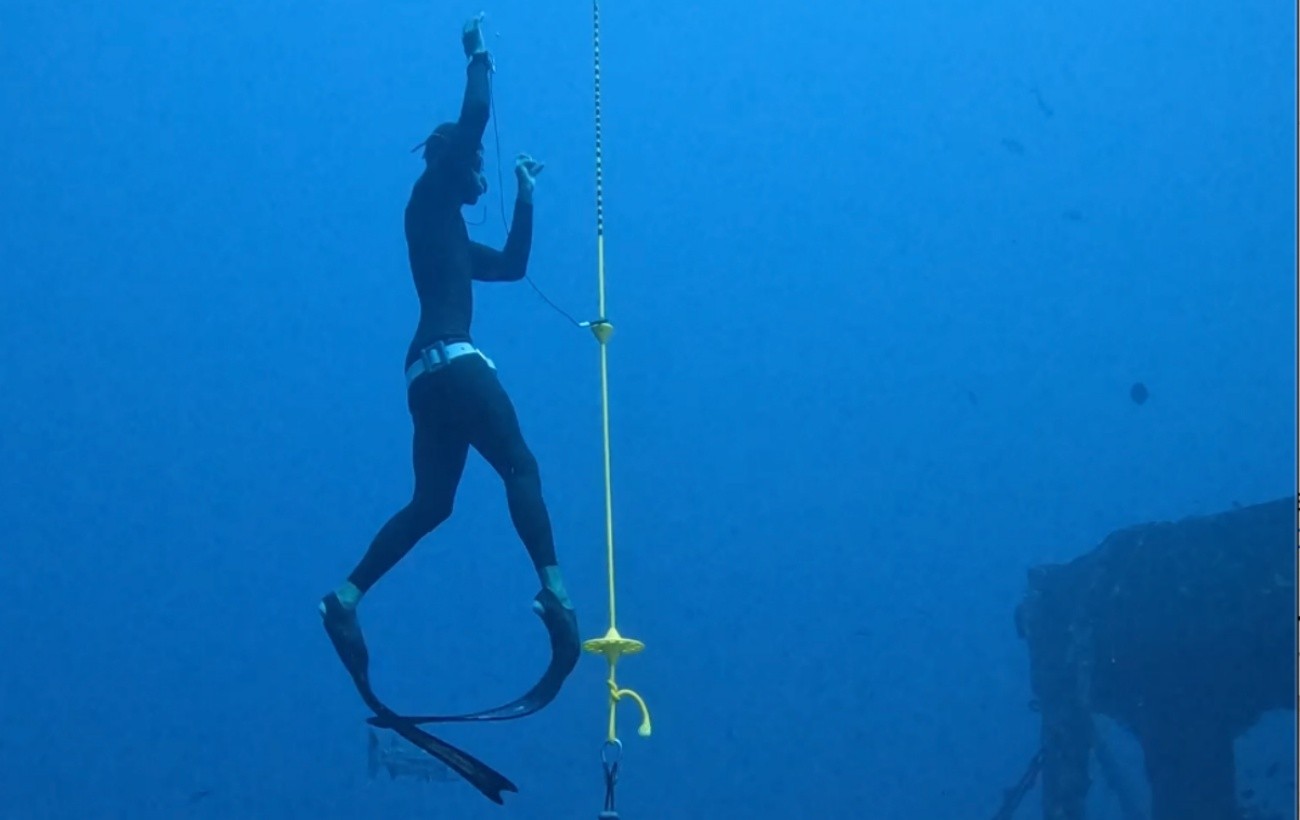
Athlete Marcello Cardoso, known as Marcello Bahia, performed a 51-meter freedive at the Corveta Ipiranga shipwreck in Fernando de Noronha on Sunday, May 26th. This freedive, completed without an air cylinder, is considered a significant challenge, with no similar dives recorded at the site for over two decades. Cardoso's descent and ascent took 1 minute and 40 seconds. He utilized a guide rope, noting that strong currents complicated the operation. The athlete explained that the current positioned the rope directly over the wreck, providing an ideal visual, which led them to forgo a deeper dive. Cardoso, a resident of Fernando de Noronha, is also the current Brazilian static apnea champion, having held his breath for 6 minutes and 25 seconds in a competition in Belém, Pará. He described the Corveta Ipiranga dive as a personal achievement, highlighting the site as one of the island's deepest and most beautiful diving spots. The Corveta Ipiranga (V-17), a Brazilian Navy vessel that sank in 1983 near Ponta da Sapata after hitting an uncharted submerged rock, is a well-known wreck and popular dive site. Cardoso stated his intention to revive freediving traditions in Fernando de Noronha, honoring past local divers renowned for their deep dives, such as Júlio Grande and Biu Guarda, whose skills have become less recognized over time.
This event highlights the enduring human drive for exploration and mastery over extreme environments, even in the face of inherent risks. The athlete's accomplishment, while personally significant and a nod to historical diving practices on the island, also underscores the evolving capabilities in freediving technology and training. From a systems perspective, the dive's success depended on precise environmental assessment (currents, depth) and personal physiological control, demonstrating a mastery of biological limits. Looking ahead, such feats may inspire further advancements in underwater exploration and potentially inform technologies for human endurance in challenging conditions, while also prompting discussions on safety protocols and the sustainable preservation of historical underwater sites like the Corveta Ipiranga.
AI-generated to prompt reflection — not editorial opinion, not advice, not a statement of fact. How this works.