French startup ZML offers free AI software to challenge Nvidia's dominance
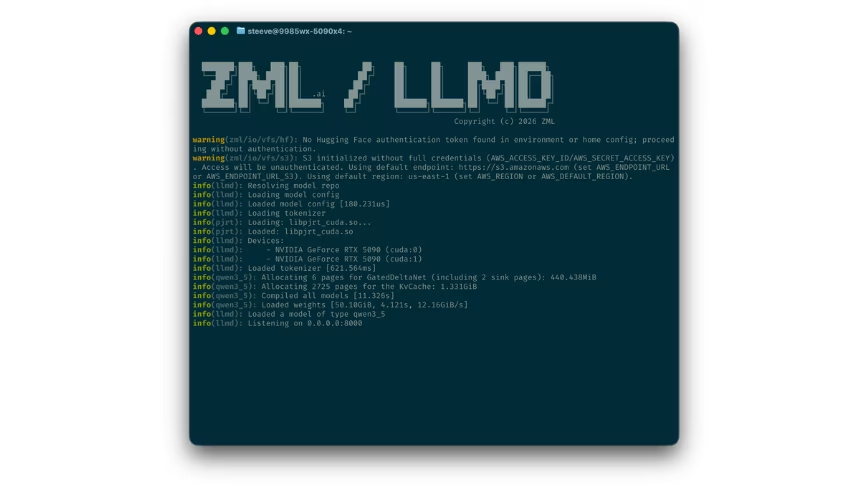
Paris-based startup ZML aims to disrupt Nvidia's strong hold on the artificial intelligence hardware market by offering a free, cross-compatible software tool. Unlike competitors focusing on chip development, ZML's solution enables open-source AI models to run efficiently on a variety of silicon, including those from Nvidia, AMD, Google, Apple, and Intel. This initiative seeks to provide greater flexibility and reduce reliance on a single hardware provider within the rapidly evolving AI landscape. While Nvidia continues to lead in AI hardware, ZML's software-based approach represents a significant move towards democratizing AI model deployment. The company's strategy is to foster an open ecosystem where AI development is not constrained by proprietary hardware limitations. This could potentially accelerate innovation by allowing researchers and developers to leverage diverse hardware resources seamlessly. The long-term impact of ZML's free software on the competitive dynamics of the AI hardware market remains to be seen, but it signals a growing trend towards interoperability and open solutions.
The emergence of ZML's free, cross-chip AI software highlights a critical tension in the AI hardware market: the desire for open interoperability versus the benefits of specialized, optimized hardware. Nvidia's current market leadership is largely built on its CUDA ecosystem, which creates a powerful lock-in effect for developers. ZML's strategy directly challenges this by abstracting hardware differences, potentially lowering the barrier to entry for AI model deployment and fostering a more competitive hardware landscape. This could incentivize hardware manufacturers to focus on performance and cost-effectiveness, rather than solely on software ecosystem integration. Looking ahead, the success of such initiatives will depend on their ability to match or exceed the performance of proprietary solutions and gain widespread developer adoption, potentially reshaping the incentives for hardware innovation in the AI era.
AI-generated to prompt reflection — not editorial opinion, not advice, not a statement of fact. How this works.