Frida Kahlo's Dual Transformation: From Artist to Global Brand
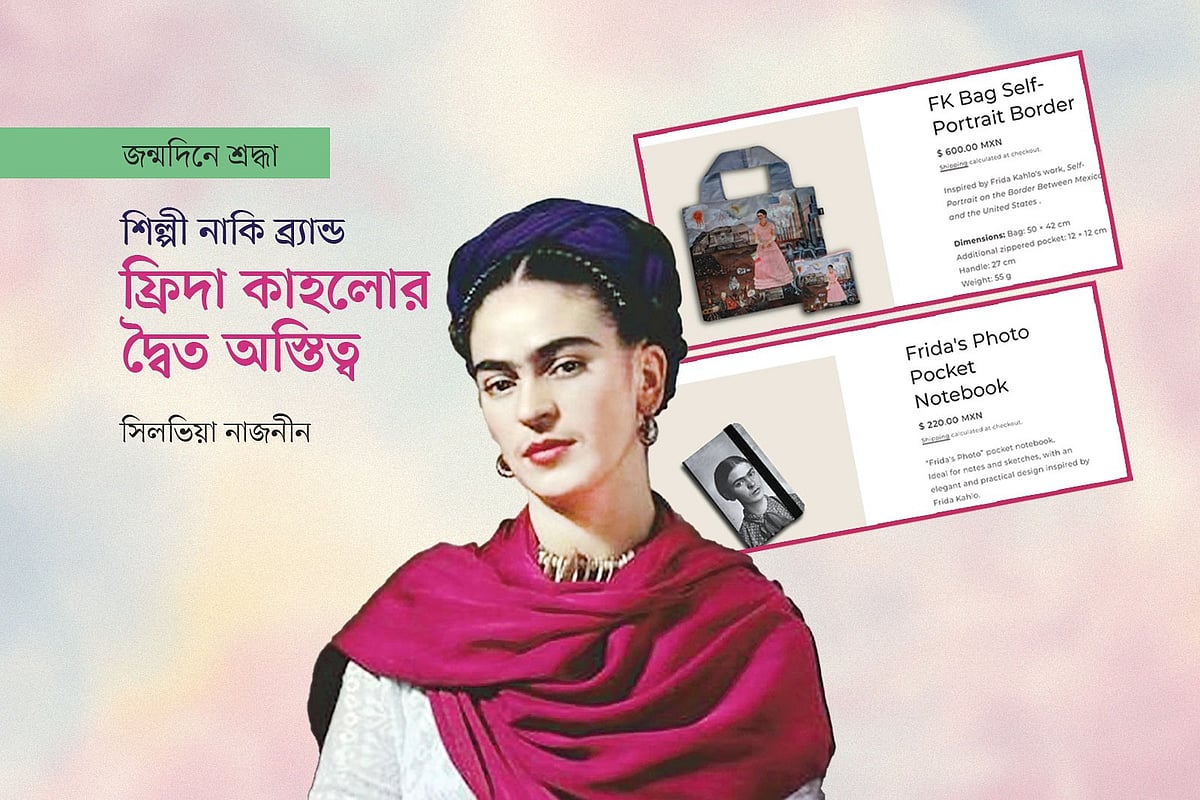
Frida Kahlo, once primarily known as Diego Rivera's wife, has now surpassed him in fame, with Rivera now often identified as 'Frida Kahlo's husband.' This shift in recognition, however, is not solely an artistic phenomenon but also a matter of power dynamics. Beyond her artistic renown, Kahlo has undergone a significant transformation from an artist into a global brand. This transition is intertwined with her rise in fame, as the marketplace has become as prominent as art history in defining her legacy.
While Rivera's large-scale murals remain fixed, institutional, and state property, Kahlo's image has become a ubiquitous, freely floating symbol appearing on tourist merchandise and fashion labels, making her highly marketable but also, paradoxically, isolated. The commercialization of Kahlo's image raises questions about how her suffering is romanticized for consumption, while male artists' abuses are framed as 'artistic temperament.' This framing creates a false equivalence, as Kahlo's power stemmed from resistance, not institutional authority, unlike Rivera's.
Kahlo strategically cultivated her distinct public image through her clothing, hairstyles, and floral headdresses, which served as a political statement of Mexican indigenous heritage and Mestizo nationalism. However, this iconic image now often overshadows her actual artwork, leading to a situation where many recognize her likeness but know little about her artistic techniques. The term 'Fridamania' has been used since the 1990s to describe this phenomenon, which has permeated academic discourse and critical analysis. This commercialization extends to fashion brands like Converse and Zara, and even a Barbie doll, which, despite its 'Inspiring Women' series designation, faced criticism for altering Kahlo's features and was ultimately banned from sale in Mexico.
The commercial exploitation of Kahlo's legacy is further complicated by ownership disputes. The Panama-based Frida Kahlo Corporation claims trademark rights, conflicting with a trust established by Diego Rivera in 1955 to protect their works and property as national assets. This conflict is exemplified by 'Frida Kahlo Tequila,' a product that commodifies the image of a communist artist who struggled with alcoholism and chronic pain. The proliferation of Kahlo-themed items on platforms like Etsy, with tens of thousands of results, has led to legal battles, with artists challenging the corporation's exclusive rights to sell Frida-inspired art. Future exhibitions, such as 'Frida: The Making of an Icon' at London's Tate Modern in 2026-27, focus on image-making rather than her art. Meanwhile, the Casa Roja museum in Mexico City, managed by Kahlo's descendants, highlights the fragmented control over her inheritance among family, corporations, and the state.
This commodification extends into established museums, with some exhibitions dedicating entire sections to 'Fridamania,' showcasing how her face has been transformed into merchandise like keychains and magnets. Critics describe this as a form of 'fetishistic exoticism,' where the weight of her image obscures her actual artistic contributions. There's a post-colonial dimension, as Kahlo's image is more readily available in New York than on the streets of Mexico City, where wearing Frida-themed merchandise is more indicative of foreign tourists. This transformation of a socialist symbol into a depoliticized, marketable commodity mirrors the commodification of figures like Che Guevara, turning a complex national identity into easily digestible 'Mexicanness' for the global market.
The commercialization of Frida Kahlo's image presents a complex interplay between artistic legacy, market forces, and identity politics. While her global recognition has elevated her status, it has also led to a superficial engagement with her work, prioritizing her iconic persona over her artistic innovations. This phenomenon raises critical questions about how cultural icons are leveraged for profit, potentially diluting their original messages and political contexts. The appropriation of her image by multinational corporations and the subsequent legal battles over ownership highlight the challenges of preserving artistic integrity in a capitalist system. Furthermore, the disparity between her global branding and her local significance in Mexico suggests a post-colonial dynamic where authentic cultural expressions are often repackaged and sold back to the world in an exoticized form. The future trajectory of Kahlo's legacy will likely involve navigating these competing interests—artistic preservation, corporate exploitation, and the evolving understanding of her cultural impact.
AI-generated to prompt reflection — not editorial opinion, not advice, not a statement of fact. How this works.