From AI Companion App to Family Robot: Xinyan Group's Bold Leap into Hardware
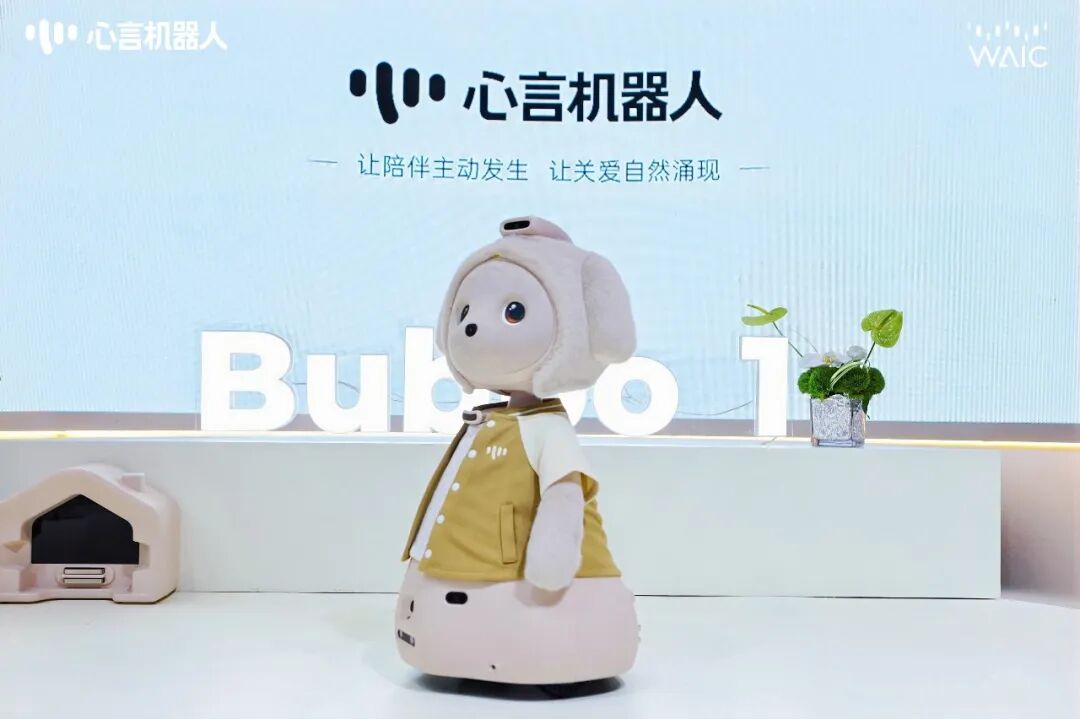
Xinyan Group, known for its popular AI emotional companion app 'Cai Cai' which boasts over 60 million users and generates hundreds of millions in revenue annually, has made a significant strategic pivot. Founder and CEO Ren Yongliang has directed the company to develop a physical robot, integrating their advanced AI emotional support capabilities into a hardware product. This move comes as Ren Yongliang recognizes the inherent limitations of screen-based, one-way communication for complex family interactions, such as child-rearing, elder care, and general household engagement.
The company's new offering, the Buboo 1 (Baboo) family robot, was recently showcased at WAIC 2026. Unlike many existing smart devices that rely on voice commands, Buboo 1 is designed for proactive, ambient interaction. It can initiate conversations and respond to social cues without explicit wake-up words, demonstrating an ability to 'read the room.' This capability is built upon Xinyan Group's proprietary 'Xinyuan' large language model, which has been trained on vast amounts of emotional data from the Cai Cai app. The robot's technical foundation includes a three-layer architecture: a language model for contextual understanding, a multimodal model for processing visual and auditory input, and a embodied model for action and interaction.
Xinyan Group views this transition as a natural extension of their user lifecycle, addressing the emotional needs of users as they move from romantic relationships into family life. While the Cai Cai app caters to individual emotional support, Buboo 1 aims to provide a physical presence that can participate in daily life, understand nuanced emotions, and offer companionship. The robot's design, including its 65cm height and soft, rounded exterior, is optimized for home environments and aims to foster a sense of emotional connection and support within families, addressing the growing need for tangible, high-quality companionship in an increasingly atomized society.
The strategic shift by Xinyan Group from a successful online emotional support app to a physical family robot represents a significant bet on the future of embodied AI in domestic settings. This pivot acknowledges the limitations of purely digital interaction for deep human connection and seeks to capture a nascent market for AI that can offer a tangible, emotionally intelligent presence. The company's reliance on its extensive user data from the Cai Cai app for training its proprietary AI models positions it to potentially develop a nuanced understanding of household dynamics. However, the success of such a venture hinges on overcoming significant technical and market challenges, including achieving truly seamless, non-intrusive proactive interaction, ensuring robust data privacy, and demonstrating clear value beyond novelty in a competitive consumer electronics landscape. The long-term viability will likely depend on the robot's ability to adapt to diverse family needs and integrate harmoniously into daily life, rather than becoming another piece of underutilized technology.
AI-generated to prompt reflection — not editorial opinion, not advice, not a statement of fact. How this works.