From Danish Hippie to Buddhist Lama: The Life of Ole Nydahl
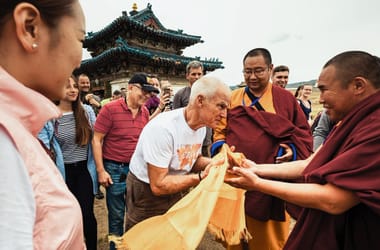
The documentary "Meeting the Buddha," by director Márta György-Kessler, explores the lives of two remarkable figures: the 16th Karmapa and the recently deceased Ole Nydahl. Nydahl, initially like many of his contemporaries, sought enlightenment through psychedelic substances. However, a pivotal encounter irrevocably altered the course of his life. The film, enhanced with animated segments, presents a dual portrait of these influential personalities. In an interview, György-Kessler discussed Buddhism, filmmaking, joy, letting go, and her film's central subject and teacher. The documentary delves into Nydahl's transformation from a Danish hippie into a respected Buddhist lama, highlighting the profound impact of his spiritual journey. The narrative emphasizes the transformative power of spiritual awakening and the guidance provided by his teacher, the 16th Karmapa. The film aims to offer insights into Buddhist philosophy and the personal quest for enlightenment.
This biographical documentary examines the spiritual evolution of Ole Nydahl, tracing his path from psychedelic exploration to becoming a Buddhist lama under the tutelage of the 16th Karmapa. The film's narrative structure, combining biographical elements with animated sequences, suggests an effort to visually represent abstract spiritual concepts and personal transformation. By focusing on Nydahl's journey, the documentary taps into broader themes of seeking meaning and enlightenment in the modern era, particularly in contrast to counter-cultural movements of the mid-20th century. The analysis of such a life path invites consideration of how individuals navigate spiritual traditions, the role of charismatic teachers, and the integration of diverse philosophical influences within established religious frameworks. The film's release, following Nydahl's passing, positions it as a retrospective on his legacy and teachings, prompting reflection on the enduring appeal of Buddhist philosophy and its adaptation across different cultural contexts.
AI-generated to prompt reflection — not editorial opinion, not advice, not a statement of fact. How this works.