From Sickle to Spacecraft: Slovakia's Harvest Reflects Farmer Struggles
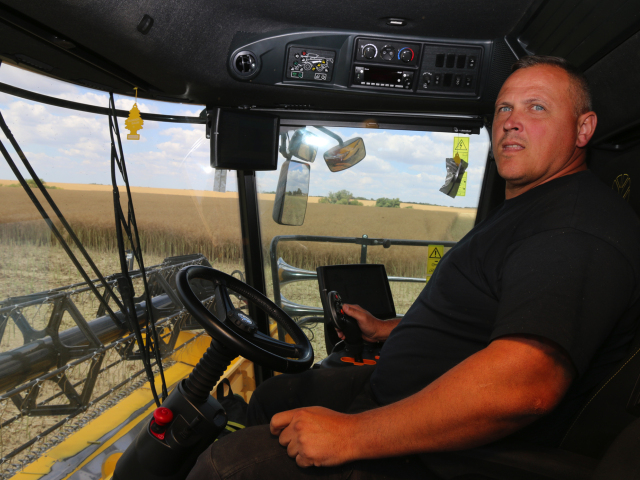
The evolution of agriculture in Slovakia, from ancient tools to modern technology, is highlighted during the current wheat harvest. Thousands of combine harvesters are working to gather the season's wheat, the staple grain, within a few days. This rapid harvesting process is a stark contrast to the manual labor of the past, representing a technological leap of millennia. The article draws a parallel between the historical achievement of launching the first satellite into space nearly seventy years ago and the profound, yet often overlooked, revolution that orbiting satellites have brought to modern farming. These advancements, while increasing efficiency, also underscore the complex challenges faced by farmers today.
The narrative juxtaposes historical technological milestones, like the first satellite launch, with the contemporary realities of agricultural mechanization. While advanced technology has dramatically increased harvesting speeds, it also implicitly raises questions about the economic sustainability of farming operations. The transition from manual labor to sophisticated machinery necessitates significant capital investment, potentially creating financial pressures for farmers. This technological advancement, while a testament to human ingenuity, may be contributing to a system where only larger, more capitalized operations can thrive, leading to the 'struggles for survival' mentioned. Future agricultural systems will need to balance efficiency gains with equitable economic models that support diverse farming scales.
AI-generated to prompt reflection — not editorial opinion, not advice, not a statement of fact. How this works.