Frost blankets Campos do Jordão, SP, creating a white winter landscape
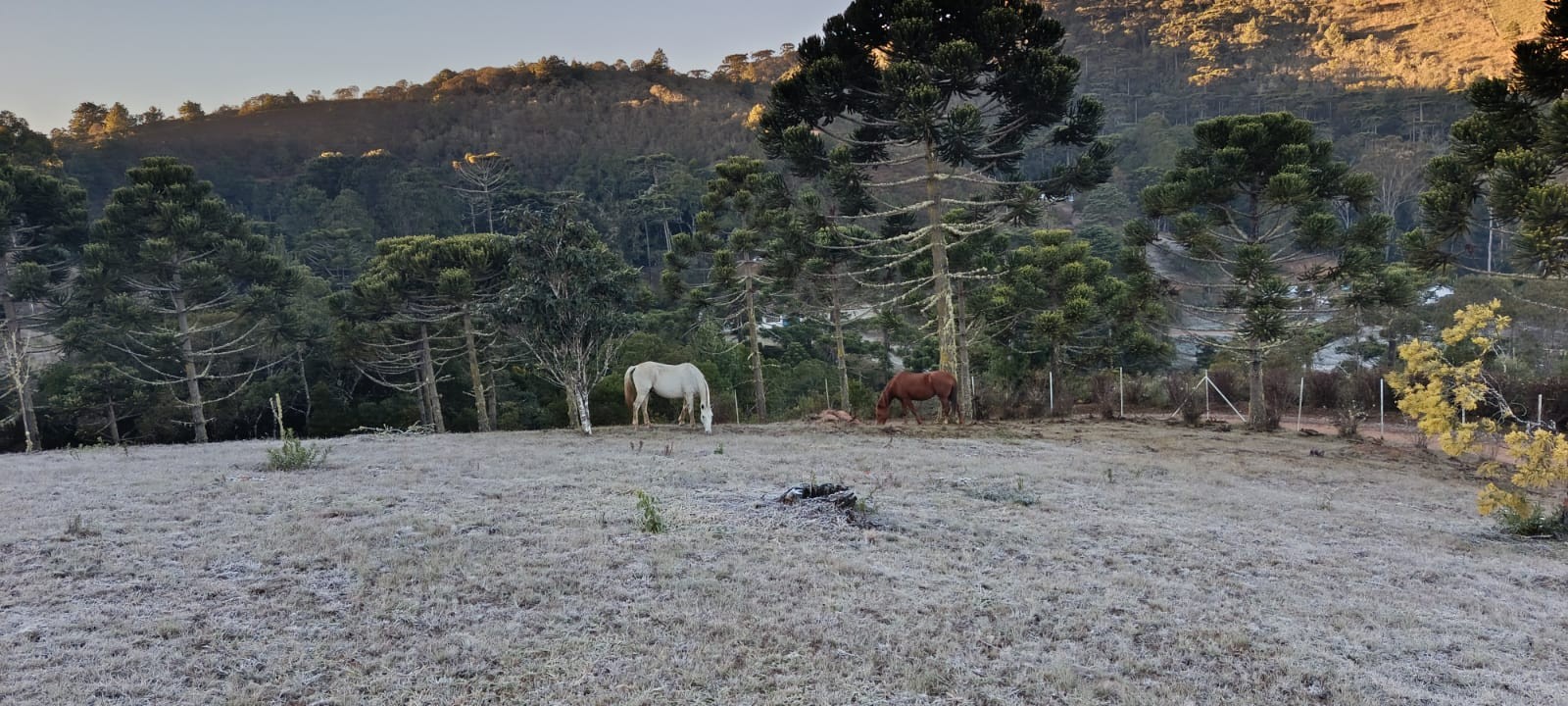
Campos do Jordão, located in the Serra da Mantiqueira mountain range, experienced frost on the morning of Thursday, June 16th. The minimum temperature recorded was 2.1°C, causing cars, lawns, pastures, and trees to be covered in a thin layer of ice, resulting in a white landscape in various parts of the municipality. Resident Marcelo Bueno captured images of vehicles covered in ice, completely whitened lawns, and frozen branches in the Parque Maria de Lourdes during the early morning hours. The lowest temperature of the day was registered at 6 AM by the National Institute of Meteorology (Inmet), with thermometers hovering around 4°C throughout the night. Although the cold was intense, the temperature remained above the year's record low of 1.3°C, set on Wednesday, June 15th, when the city also woke up covered in frost. Frost forms when the temperature near the ground drops enough to freeze accumulated dew on surfaces. This phenomenon is common in the Serra da Mantiqueira during winter, typically occurring on clear, low-wind mornings. The frost observed also poses a risk to drivers, potentially making some mountain roads slippery in the early hours. Other cities in the Paraíba Valley also recorded low temperatures, with Taubaté matching its year's cold record at 5.5°C and São Luiz do Paraitinga setting a new low of 3.4°C, surpassing its previous record from June 15th.
This event highlights the predictable seasonal weather patterns in high-altitude regions like the Serra da Mantiqueira. The occurrence of frost, while visually striking, is a natural consequence of specific meteorological conditions: low temperatures, clear skies, and sufficient atmospheric moisture. From a systems perspective, such events underscore the importance of localized climate data for public preparedness, particularly for transportation safety on potentially icy roads. The data from Inmet provides valuable insights into microclimates within the region, demonstrating variations even between nearby municipalities. Understanding these temperature differentials is crucial for agricultural planning and managing potential impacts on local flora and fauna, especially as climate variability potentially influences the frequency and intensity of such phenomena in the future.
AI-generated to prompt reflection — not editorial opinion, not advice, not a statement of fact. How this works.