Fruits and Vegetables: How Our Familiar Foods Evolved from Ancient Forms
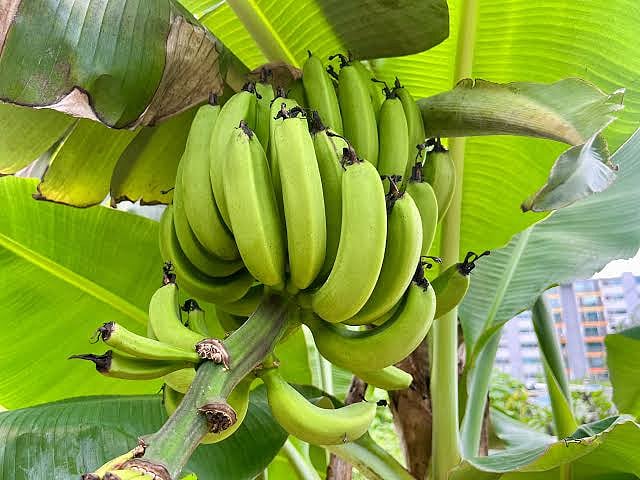
Our commonly known fruits and vegetables have undergone significant transformations in appearance and taste over thousands of years, diverging dramatically from their wild ancestors. Driven by human necessity and selective breeding, these ancient plants have been cultivated to possess traits we now find desirable, such as increased juiciness, sweetness, and size. This process, distinct from modern genetic modification (GMO) which involves introducing genes from other organisms, has been a slow, deliberate effort by farmers over millennia.
For instance, the watermelon, depicted in a 17th-century painting by Giovanni Stanchi, had a less vibrant, non-red interior with distinct geometric sections, unlike the uniformly red and juicy flesh of today's varieties. Similarly, the banana, first cultivated 7,000 to 10,000 years ago in Papua New Guinea and Southeast Asia, evolved from wild ancestors with large, hard seeds into the sweet, easily peelable fruit we know. Ancient eggplants, initially cultivated in China, were characterized by sharp thorns on their stems, a feature largely eliminated through selective breeding to produce the smooth-skinned varieties available now. Carrots, first cultivated around the 10th century in Persia and Asia Minor, were originally thin, white or purple roots with a strong scent, contrasting with the large, sweet, orange carrots common today. Maize, or corn, a prime example of selective breeding, originated from a largely inedible wild grass called teosinte around 7,000 BCE. Modern corn is over 1,000 times larger than its ancient counterpart, with a significantly higher sugar content, a change partly accelerated after the 15th century with European settlement. Even peaches, first cultivated by ancient Chinese around 4,000 BCE, were once small, cherry-sized fruits with minimal flesh and a taste described as earthy and slightly salty, now vastly larger, juicier, and sweeter.
The evolution of fruits and vegetables through selective breeding highlights humanity's long-standing capacity to shape its environment and food sources. This historical process demonstrates a consistent drive to optimize crops for palatability, yield, and ease of cultivation, mirroring contemporary efforts in agricultural biotechnology. Examining this deep history prompts reflection on the trade-offs inherent in agricultural development: while we have gained abundance and desirable traits, we may have also reduced genetic diversity and altered the nutritional profiles of our staple foods. Understanding these past transformations provides a crucial lens through which to evaluate current and future agricultural innovations, such as genetic engineering, considering their long-term ecological and societal implications.
AI-generated to prompt reflection — not editorial opinion, not advice, not a statement of fact. How this works.