Gabon Council Confirms Post-Transition Agenda: Energy, Justice, and Governance Reforms
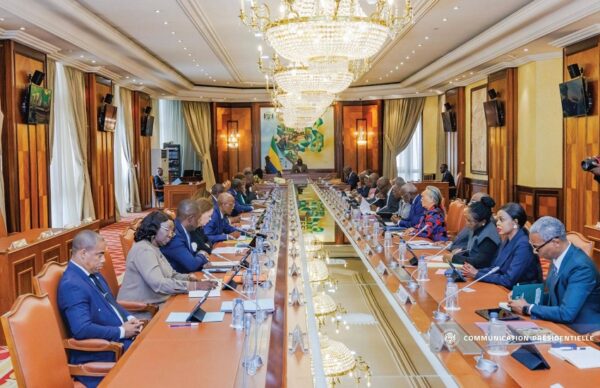
The Gabonese Council of Ministers convened on Thursday, June 25th, at the Presidential Palace to deliberate on approximately twenty texts concerning energy, constitutional justice, high public service, and economic diplomacy. A central theme guiding these discussions appears to be the confirmation of the post-transition agenda for the nation. Key decisions included deliberations on the sacred nature of governmental decisions and the potential dismantling of the Société d'Energie et d'Eau du Gabon (SEEG). The council also addressed the issuance of ordinances, signaling a move towards solidifying new governance structures and policies. These measures indicate a strategic effort to reshape the country's energy sector, judicial framework, and administrative apparatus. The meeting underscored a commitment to establishing a clear direction for Gabon following the transitional period. The outcomes suggest a focus on strengthening institutional frameworks and potentially restructuring key public services. The discussions covered a broad spectrum of governmental responsibilities, aiming to implement reforms across multiple vital sectors.
The Gabonese Council of Ministers' recent session, focused on energy, justice, and governance, signals a strategic consolidation of power and policy direction post-transition. The emphasis on the 'sacrality of decisions' suggests an intent to establish firm, potentially less contestable, executive authority. The potential dismantling of SEEG, a critical utility provider, indicates a significant restructuring of state-owned enterprises, likely driven by efficiency concerns, privatization pressures, or a desire to reallocate control. The issuance of ordinances points to a proactive legislative agenda aimed at embedding the new political order. These moves, viewed through a decade-long lens, reflect a common pattern in post-transition states seeking to solidify institutional legitimacy and operationalize reforms, though the long-term impact on public service delivery and economic stability remains to be seen.
AI-generated to prompt reflection — not editorial opinion, not advice, not a statement of fact. How this works.