Gal Costa's 1986 World Cup Anthem: A Look Back at "70 Neles!"
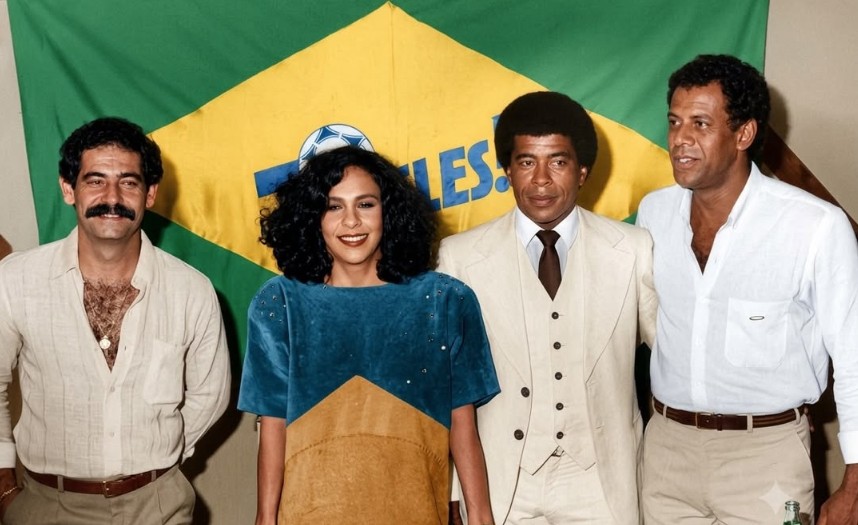
Forty years ago, Brazilian music icon Gal Costa lent her voice to the national football team's campaign for the 1986 World Cup in Mexico. In December 1985, Costa, then at the height of her popularity following her 1985 album "Bem bom," participated in the launch event for the "70 neles!" (Seventy them!) advertising campaign in Rio de Janeiro. This initiative, produced by a cigarette company, positioned Costa as the voice of the Brazilian national team, aiming to inspire them to win their fourth World Cup title. Costa recorded an original jingle, also titled "70 neles," composed by Antônio Edgard Gianullo and Vicente de Paula Salvia. The song, a march referencing Brazil's 1970 World Cup victory, was released in 1986 with musical production by Guti Carvalho. It was issued as a standalone single and featured in television commercials for the cigarette brand. The recording was later included in Costa's 1999 compilation album in the "Focus" series. Despite Costa's encouragement and the nation's hopes, Brazil's quest for a fourth title ended with their elimination by France in the quarter-finals. Nevertheless, the "70 neles" recording remains a notable part of both Gal Costa's discography and World Cup history.
This event highlights the intersection of sports, music, and commercial interests in nationalistic fervor. The use of a popular artist like Gal Costa to promote a campaign, even one associated with a product like cigarettes, underscores the power of cultural figures in shaping public sentiment and national identity during major sporting events. The campaign's focus on the "Tetracampeonato" (fourth title), referencing the 1970 victory, demonstrates a strategic appeal to historical success and national pride. While the jingle aimed to galvanize support, the team's ultimate performance indicates that external motivational efforts, regardless of their cultural resonance or commercial backing, do not guarantee athletic outcomes. This instance serves as a case study in how national aspirations are amplified through media and celebrity, and how these efforts interact with the unpredictable nature of competitive sports.
AI-generated to prompt reflection — not editorial opinion, not advice, not a statement of fact. How this works.