Galaxy Groups Discovered in Universe's Vast Empty Regions
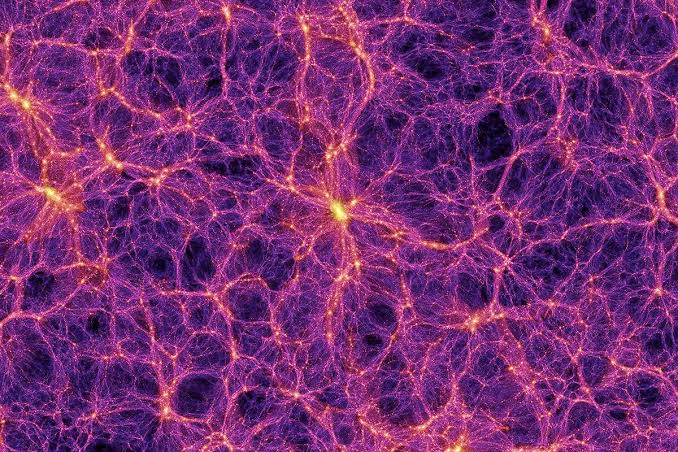
A new study utilizing the CAVITY survey has identified galaxy groups residing in the universe's extensive voids, regions previously thought to be almost entirely empty. Researchers employed a 'friends of friends' technique to map how galaxies cluster together, even in these sparse environments. The findings indicate that while most galaxies within these voids exist in isolation, some do form groups. These void-dwelling groups are characterized as small, loosely bound, and surprisingly unaffected by the extreme emptiness surrounding them. The study poses a fundamental question about the factors influencing galactic social behavior, specifically why some galaxies in the universe's quietest areas form groups while the majority remain solitary.
This research challenges the assumption of absolute emptiness in cosmic voids, revealing the presence of galaxy groups even in the least dense regions of the universe. The study's findings on the formation and characteristics of these groups, particularly their apparent indifference to the surrounding void's emptiness, prompt a re-evaluation of gravitational and environmental influences on galaxy evolution. Future investigations could explore the underlying mechanisms that drive galaxy clustering in such low-density environments, potentially refining our understanding of large-scale structure formation and the distribution of matter in the cosmos. Understanding these dynamics could have implications for cosmological models and the prediction of galaxy distribution across vast cosmic scales.
AI-generated to prompt reflection — not editorial opinion, not advice, not a statement of fact. How this works.