Gale-force winds over 100 km/h hit Angra dos Reis and Paraty, causing disruptions
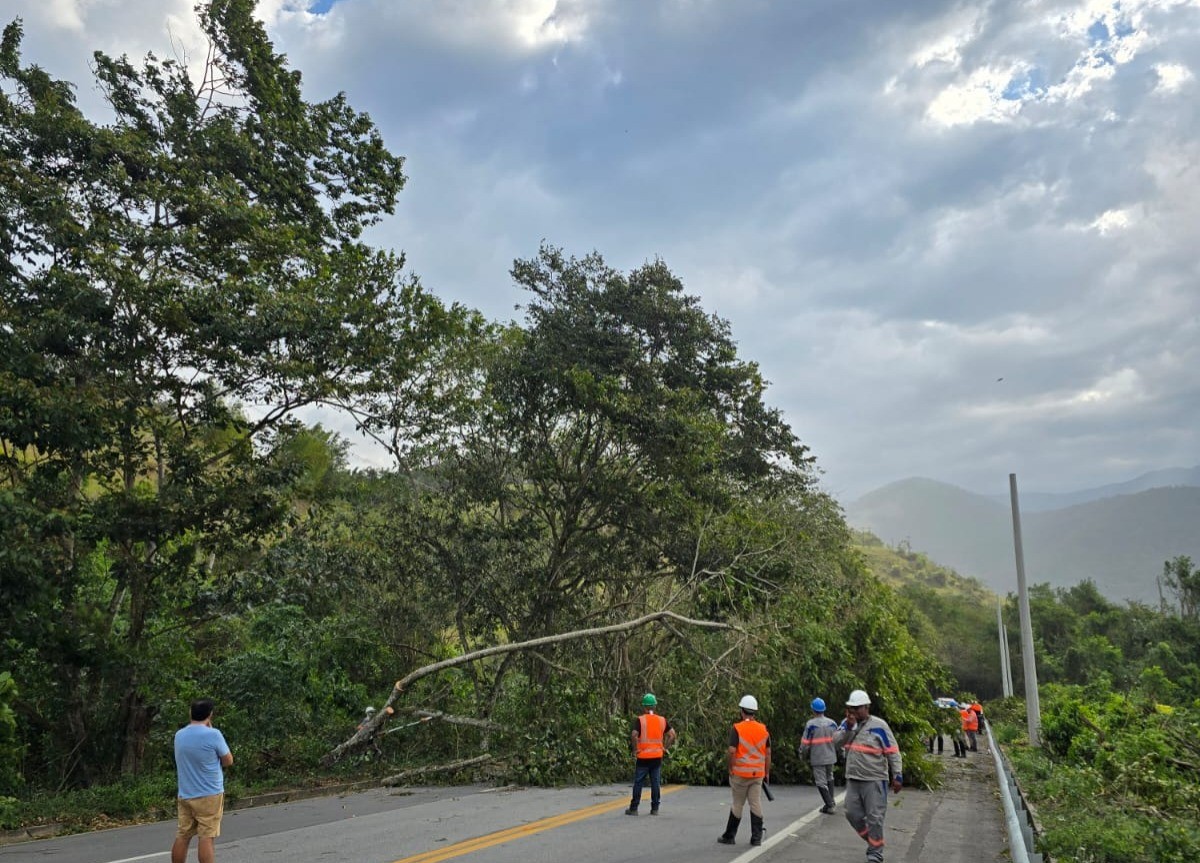
Strong winds with gusts exceeding 100 km/h struck the Costa Verde region of Brazil, specifically affecting Angra dos Reis and Paraty in Rio de Janeiro state on Wednesday afternoon, November 29th. The Civil Defense and the National Institute of Meteorology (Inmet) had previously issued warnings for moderate to strong coastal winds. The intense winds were attributed to the convergence of two cold fronts, originating from Paraná and Paraguay, interacting with a warm air mass over the area. Images shared on social media depicted the significant force of the wind and its impact. The Civil Defense advised residents to avoid seeking shelter under large trees and metal structures, and to refrain from traveling or navigating in risk areas during the adverse weather. Residents in Angra dos Reis can opt to receive Civil Defense alerts via SMS by sending their postal code to 40199. The concessionaire managing the Rio-Santos highway reported three sections closed due to fallen trees in Angra dos Reis (kilometers 455 and 459) and Paraty (kilometer 245), all affecting lanes heading towards Rio de Janeiro. As of the report, there were no confirmed injuries or displaced individuals in either municipality.
The extreme weather event in Angra dos Reis and Paraty highlights the vulnerability of coastal communities to meteorological phenomena, amplified by potential infrastructure weaknesses. The convergence of weather fronts, as described, is a natural occurrence, but its impact underscores the importance of robust early warning systems and resilient infrastructure planning. The disruptions to the Rio-Santos highway, a critical transport artery, demonstrate the cascading effects of such events. Future preparedness strategies should consider climate change projections and their potential to intensify such weather patterns, necessitating adaptive urban planning and infrastructure upgrades to mitigate risks to both life and economic activity.
AI-generated to prompt reflection — not editorial opinion, not advice, not a statement of fact. How this works.