Gale-force winds up to 93 km/h cause damage across Rio Grande do Sul
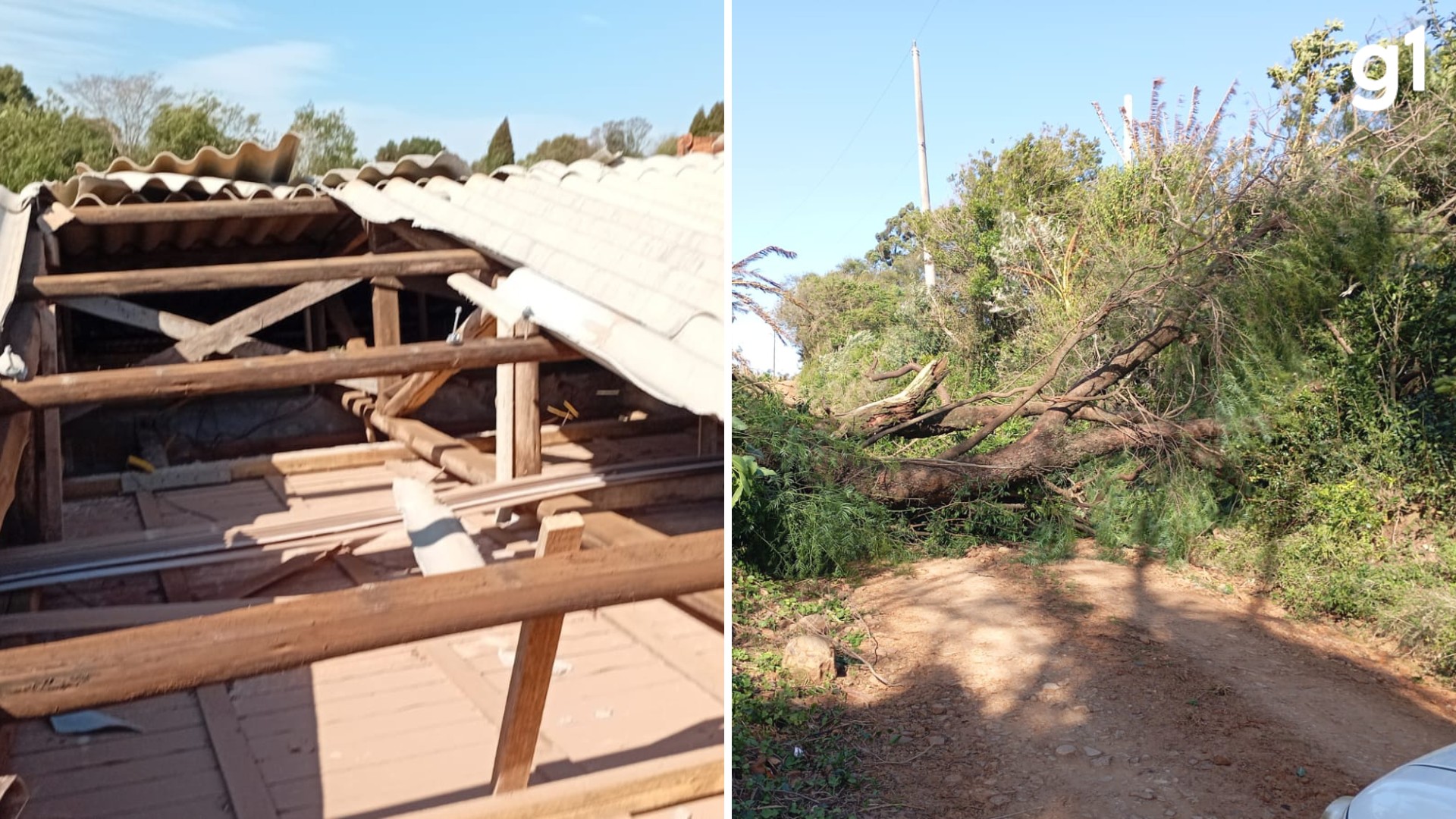
Strong wind gusts reaching up to 93.3 km/h battered at least 11 municipalities in Rio Grande do Sul on Friday, May 17th. The severe weather caused widespread damage, including roof destructions in approximately 25 homes across various cities. Notably, Alegrete reported damage to ten houses, while São Martinho da Serra saw six residences affected, and Santa Maria had five homes with roof damage. Beyond residential properties, public and commercial structures also sustained damage. In São Martinho da Serra, a CTG cultural center's roof was impacted. A church in São Francisco de Assis suffered roof damage and a partial facade collapse, alongside a pharmacy experiencing a partial ceiling failure. A school in São Pedro do Sul also had its roof damaged. In São Borja, three people were displaced due to damage to a residence, and fallen trees blocked a public road and a residential leisure area. Fallen trees and vegetation also caused power outages and blocked roads in Bagé, and obstructed a federal highway (BR-287) in Santiago. The National Institute of Meteorology (Inmet) has issued severe weather alerts for the state, warning of potential heavy rains, large hail, frequent lightning, and strong winds, with a risk of tornadoes. These alerts are in effect through Tuesday, May 21st, with varying levels of danger indicated by yellow, orange, and red warnings.
The severe weather event underscores the increasing vulnerability of infrastructure in Rio Grande do Sul to extreme meteorological phenomena. While the immediate response focuses on damage assessment and public safety, a longer-term perspective is warranted regarding climate resilience. The frequency and intensity of such events suggest a need for enhanced building codes, improved urban planning to mitigate wind and flood risks, and robust early warning systems. Public investment in climate adaptation strategies, alongside private sector innovation in resilient construction materials and technologies, will be crucial in minimizing future economic and social disruption from extreme weather in the coming decade.
AI-generated to prompt reflection — not editorial opinion, not advice, not a statement of fact. How this works.