Garbage Truck Driver Assaulted by Motorist in Goiânia, Brazil
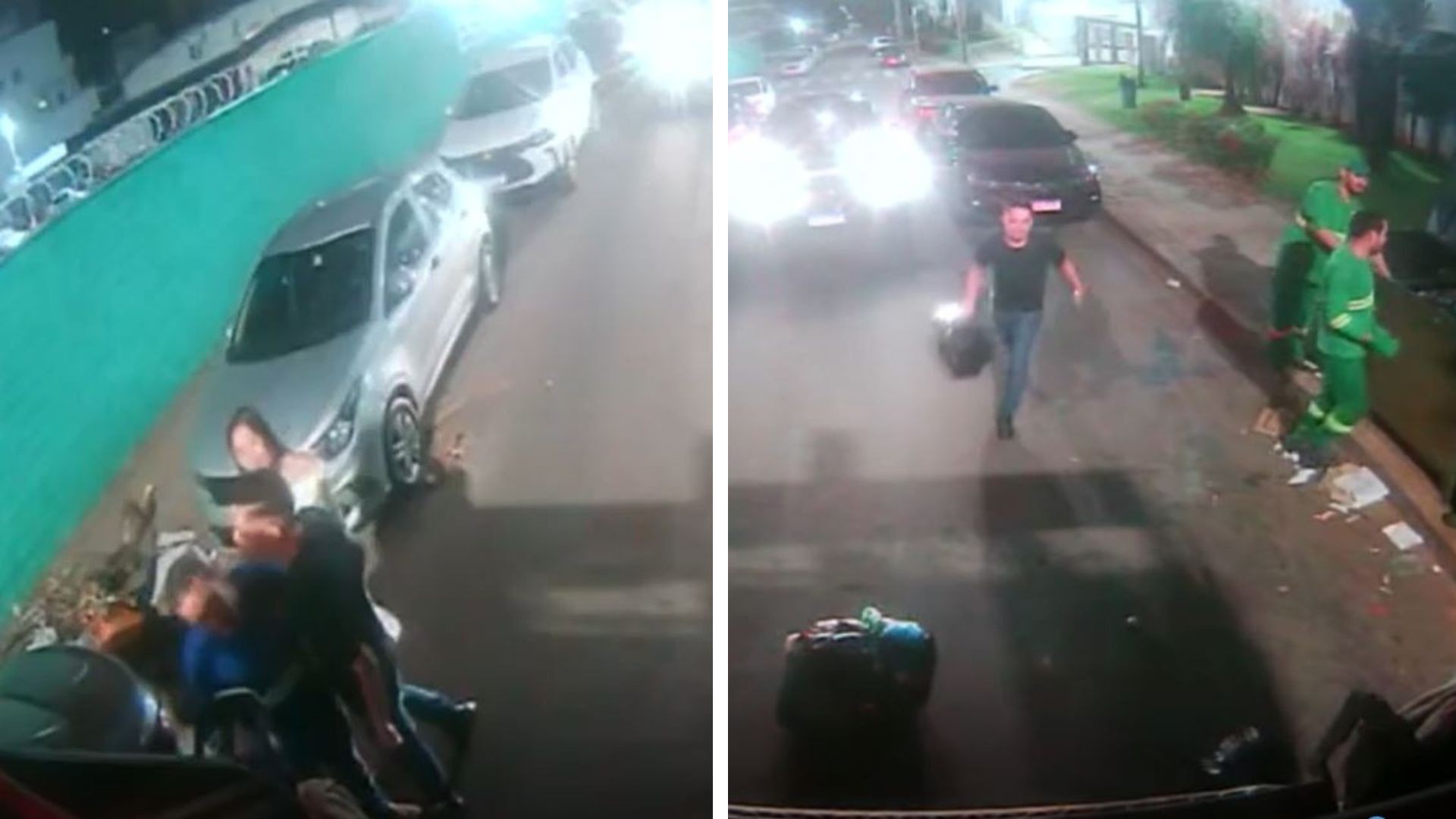
A garbage truck driver was physically assaulted by a man while working in Goiânia, Goiás, Brazil, early Tuesday morning, November 21st. The incident occurred around 3 AM on Rua T-37 in the Setor Bueno neighborhood as the Consórcio Limpa Gyn team was collecting trash. Security cameras from a nearby condominium captured the assault. The suspect, who was reportedly driving a car, has not yet been identified. According to the condominium manager, Franciely Póvoa, the man demanded the garbage truck move so he could pass. The driver explained he would move the truck after finishing the collection, which then led to the physical altercation where the man allegedly punched the driver. The video also shows a woman accompanying the man, who briefly climbed onto the back of the garbage truck. Póvoa noted that parked cars on both sides of the street, despite a "no parking" sign on one side, may have contributed to the congestion. The individuals in the car are not residents of the condominium and remain unidentified. The Consórcio Limpa Gyn confirmed that the Military Police were called, a police report was filed, and the driver visited the police station. The consortium issued a statement condemning the violence, emphasizing that its employees perform an essential service, and pledged full support to the driver and cooperation with authorities. The company also noted the couple appeared to be under the influence of alcohol and that the woman's actions put her at risk, while the man threw trash bags into the truck's compactor. The Municipal Secretariat of Traffic Engineering (SET) had not responded regarding the parking situation by the time of the report.
This incident highlights the friction that can arise between essential public service operations and private vehicle use, particularly in urban environments with traffic congestion. The driver's adherence to protocol, explaining the need to complete the collection before moving, was met with an aggressive response, suggesting a potential lack of public understanding or patience regarding the operational necessities of waste management. The involvement of alcohol, as suggested by the consortium, could be a contributing factor to the aggressor's behavior. This event underscores the need for public awareness campaigns on the importance of respecting essential workers and their operational constraints, as well as robust enforcement of traffic and parking regulations to prevent such conflicts. Future urban planning and traffic management strategies may need to better integrate the logistics of essential services like waste collection to minimize disruptions and ensure worker safety.
AI-generated to prompt reflection — not editorial opinion, not advice, not a statement of fact. How this works.