Gas generators grant priority power access to sustainable office in congested grid
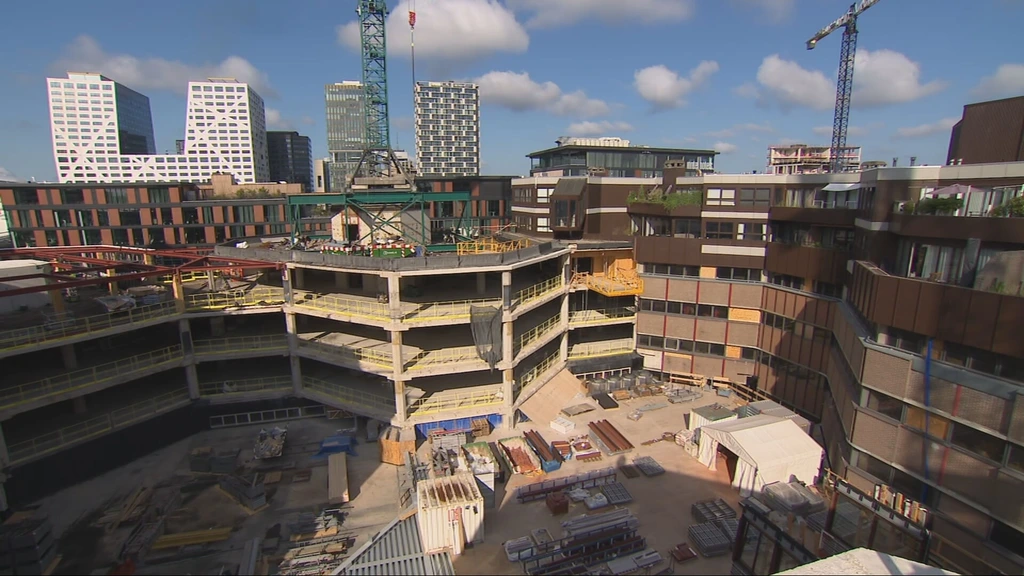
A renovated former Rabobank headquarters in Utrecht, now named De Nieuwe Tuin, has received priority connection to the electricity grid thanks to the installation of two natural gas generators. The building, which had been vacant for over a decade, is undergoing a modern, energy-efficient renovation that aims to be gas-free. However, the generators were deemed necessary by grid operator Stedin to provide a stable power supply and alleviate congestion on the local grid, especially during peak demand periods.
Developer Schroders Capital Real Estate, represented by commercial director Eppo Danser, explained that the building's long period of disuse resulted in an inadequate power connection. With the grid already overloaded, De Nieuwe Tuin faced a years-long wait for a standard connection. The generators, which Stedin will control, are expected to operate only a few days annually, supplementing the grid when demand is high and preventing outages in the surrounding area. This solution, though requiring significant investment of "many millions of euros" for space acquisition and generator installation, was the only viable option to secure a substantial power connection, according to Danser.
Stedin also deploys its own gas generators during winter peaks to ensure grid reliability. While De Nieuwe Tuin is the first project to utilize this 'congestion softener' approach, Stedin is in talks with other large projects and anticipates this trend will grow as grid capacity becomes a critical factor for new developments. Companies participating as congestion softeners receive compensation for generator usage, though it's unlikely to cover their costs. Stedin is actively working to expand grid capacity, but acknowledges that in many other cases, new connections are simply not possible due to the current network limitations.
The necessity of gas generators for a "green" building highlights a systemic contradiction in current energy infrastructure development. While the intention is to create sustainable spaces, the reliance on fossil fuel-based backup power underscores the limitations of existing electrical grids to meet escalating demand, particularly from electrification and digitalization. This situation incentivizes solutions that prioritize immediate grid stability and connection access over long-term decarbonization goals, potentially creating a precedent where fossil fuels are normalized as a 'flexible' grid resource. The substantial financial investment required for these generators suggests that grid congestion disproportionately impacts projects unable to absorb such costs, raising questions about equitable access to energy infrastructure. Looking ahead, the challenge lies in scaling renewable energy generation and storage capacity faster than demand growth, and in modernizing grid management to accommodate distributed energy resources more effectively, rather than relying on temporary, carbon-emitting stopgaps.
AI-generated to prompt reflection — not editorial opinion, not advice, not a statement of fact. How this works.