Gavião-carijó rescued in São Paulo after getting stuck in rat trap
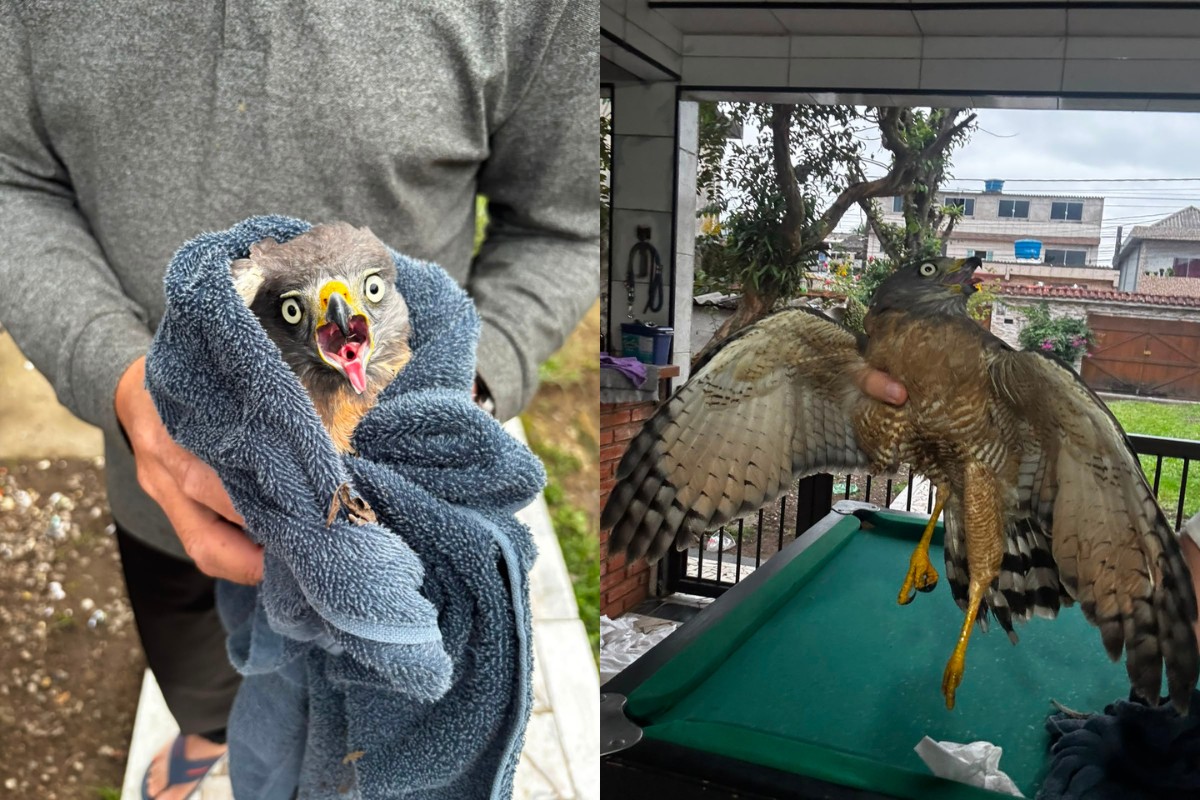
A Gavião-carijó, a common species in the Atlantic Forest and urban areas, was rescued by the Municipal Environmental Civil Guard (GCM) in São Vicente, São Paulo, on Monday, June 6th. The bird fell into the backyard of a residence in the Jóquei Clube neighborhood after becoming entangled in an adhesive rat trap. The family residing there believes the hawk attempted to prey on a rat caught in the trap, subsequently getting stuck to the adhesive. The bird managed to land on a guava tree before falling to the ground. A resident, Nicole Brito, reported that her mother carefully removed the glue trap from the bird using almond oil, a process that took about an hour before the GCM arrived. The family initially contacted the Fire Department, which advised them to reach out to the GCM Ambiental. The rescued hawk was examined by a veterinarian and is in good health, with only residual glue on its feathers. The GCM expects the bird to be returned to nature after receiving necessary care. Environmental agent Valter Santos emphasized that while the family's concern was commendable, contacting specialized teams is the safest approach, as even weakened animals can exhibit defensive instincts. The public can contact the GCM for similar situations by dialing 153.
This incident highlights the unintended consequences of rodent control methods in urban-wildlife interfaces. While adhesive traps are effective for pest management, their indiscriminate nature poses a significant risk to non-target species, including birds of prey that play a crucial role in ecosystem balance. The GCM's intervention and the bird's subsequent recovery underscore the importance of specialized wildlife rescue services. Moving forward, urban planning and pest control strategies could benefit from exploring less harmful alternatives and implementing stricter regulations on trap types to mitigate such occurrences, thereby fostering coexistence between human activities and biodiversity in increasingly encroached natural habitats.
AI-generated to prompt reflection — not editorial opinion, not advice, not a statement of fact. How this works.