Gaza Faces Fragile Food Security Despite Reduced Malnutrition Amid Aid Cuts
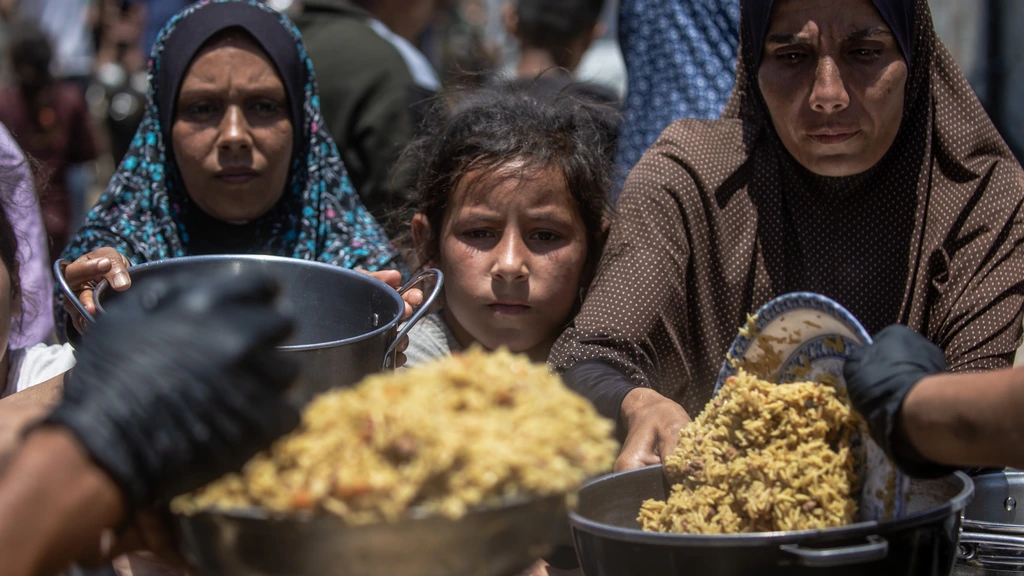
A new report by the UN food watchdog, the Integrated Food Security Phase Classification (IPC), indicates a significant decrease in acute malnutrition among Gazans, particularly children. However, widespread hunger persists, with 1.2 million people still experiencing critical food insecurity and over 200,000 in an emergency phase, one step away from famine. While a ceasefire since October 2022 has allowed for increased food distribution, the overall humanitarian situation remains dire, marked by severe shortages in sanitation, medicine, healthcare, and water. Hundreds of thousands are displaced and living in tents. The IPC, a collaboration of nineteen organizations monitoring global food crises, uses a five-category system to classify food insecurity, with famine defined by specific population-level malnutrition and mortality rates. Previously, in August 2022, famine was declared in parts of Gaza, a report Israel dismissed as fabricated, accusing UN organizations of bias. Following the October 7, 2023, Hamas attacks, Israel militarily occupied Gaza, causing widespread destruction and initially restricting essential supplies. The International Criminal Court has issued an arrest warrant for Israeli Prime Minister Netanyahu on suspicion of using starvation as a war tactic, which he denies, calling the court biased. The US government has found no evidence to support Israeli claims that Hamas has stolen large quantities of food.
The IPC report highlights a complex and precarious situation in Gaza, where a reduction in malnutrition rates is overshadowed by persistent food insecurity and a critical decline in humanitarian aid. This underscores the fragility of progress in conflict zones, where improvements can be rapidly reversed by external factors such as funding cuts and ongoing hostilities. The reliance on international aid, now constrained by budget reductions affecting key organizations like the World Food Programme, reveals systemic vulnerabilities in global humanitarian response mechanisms. The report also implicitly points to the challenges of ensuring aid delivery amidst military occupation and allegations of war crimes, suggesting that geopolitical factors significantly impede humanitarian efforts. Looking ahead, the sustainability of aid and the well-being of the population will likely depend on a combination of sustained international funding, de-escalation of conflict, and accountability for actions that impact civilian populations, all within the context of evolving international law and global political dynamics.
AI-generated to prompt reflection — not editorial opinion, not advice, not a statement of fact. How this works.