Gaza Reconstruction Plan Scaled Down to Pilot Project Under Trump's Board of Peace
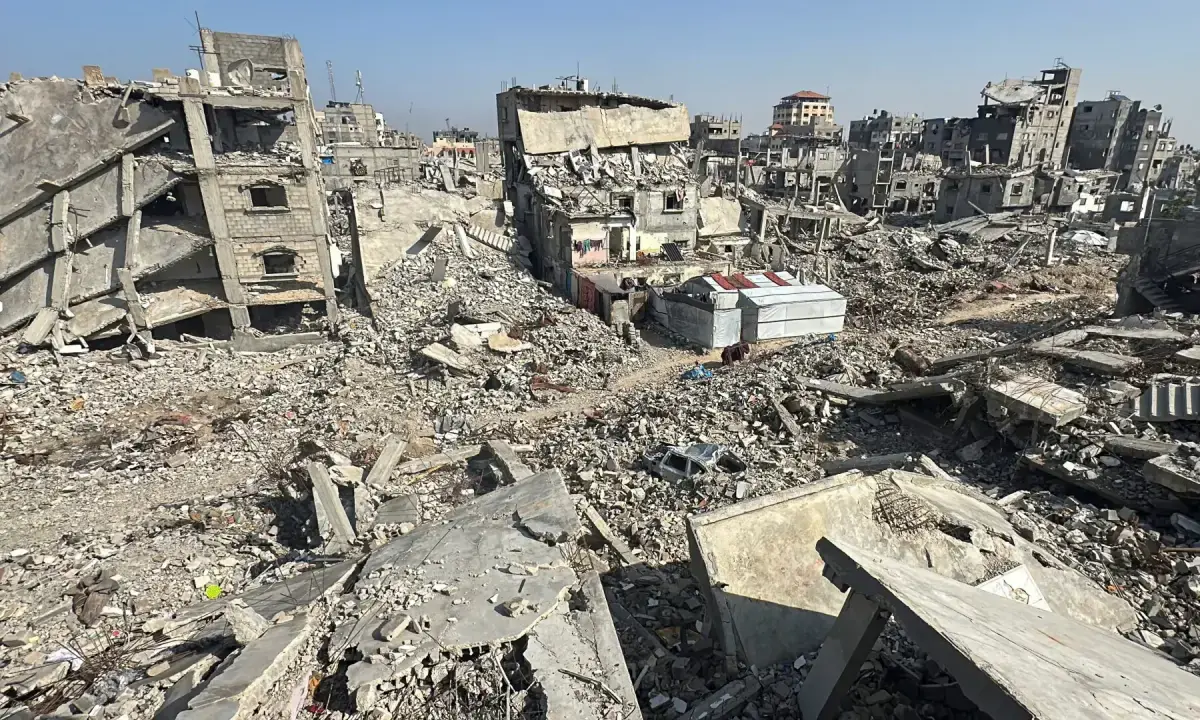
A comprehensive reconstruction plan for Gaza, initially proposed under former US President Donald Trump's Board of Peace (BoP), has been significantly reduced to a small pilot project. This shift moves away from rebuilding the entire territory towards establishing a temporary camp in southern Gaza. The BoP, established in January following a September 2025 proposal, has its headquarters at the Donald J. Trump Institute of Peace in Washington, with the US government serving as its depository. A UN Security Council resolution in November authorized the board and cooperating states to form an international stabilization force post-ceasefire. The new pilot project aims to house a fraction of Gaza's population in a temporary camp, overseen by a Palestinian administration, police, and a contingent of the International Security Force (ISF). This initiative is not expected to be fully realized before the end of 2026, though some preparatory steps are underway. Moroccan and Kosovan officers have arrived to form the ISF cadre, and a logistics base is being constructed near Kerem Shalom. Construction of the camp itself, near Rafah, has not yet commenced. The reduction in scope is partly attributed to political considerations, including upcoming Israeli elections and the desire to prevent more extreme factions from gaining influence. Concerns also exist about a potential escalation of conflict by Israeli Prime Minister Benjamin Netanyahu's government ahead of the elections. While Israeli officials cite Hamas's refusal to disarm as a reason for potential renewed conflict, Hamas has indicated willingness to disarm under specific conditions, contingent on Israel ceasing strikes and occupation. Previous pledges for extensive reconstruction aid, totaling $17 billion for Trump's peace plan, have seen minimal materialization. The pilot camp would consist of portable cabins for tens of thousands of displaced Palestinians, located in the buffer zone near Rafah and managed by the ISF and a Palestinian police force. Preference for settlement might be given to former Rafah residents, though other vetting criteria remain unclear. Pakistan is among the 14 founding member states of the Board of Peace, which was established to oversee Gaza's ceasefire and reconstruction but has a broader mandate for peace-building.
The significant scaling back of the Gaza reconstruction plan from a comprehensive rebuilding effort to a limited pilot project highlights the complex interplay of political realities, security concerns, and international cooperation. The Board of Peace's reduced ambition suggests that the initial vision faced substantial obstacles, potentially including funding shortfalls, political disagreements among stakeholders, or a reassessment of feasibility given the ongoing conflict dynamics. The emphasis on a pilot project, while framed as a pragmatic step to maintain momentum and prevent more extreme agendas from dominating, also raises questions about long-term sustainability and the potential for creating a de facto, albeit temporary, settlement zone. The reliance on an international security force and a Palestinian police contingent underscores the challenges of establishing stable governance and security in the region. Future developments will likely be influenced by regional political shifts, the outcomes of upcoming elections, and the evolving strategies of key actors, necessitating a careful evaluation of whether such limited initiatives can pave the way for lasting peace or merely serve as interim measures within a protracted conflict.
AI-generated to prompt reflection — not editorial opinion, not advice, not a statement of fact. How this works.