Gaza Residents React to Hamas Disarmament Deal Amid Ongoing Conflict
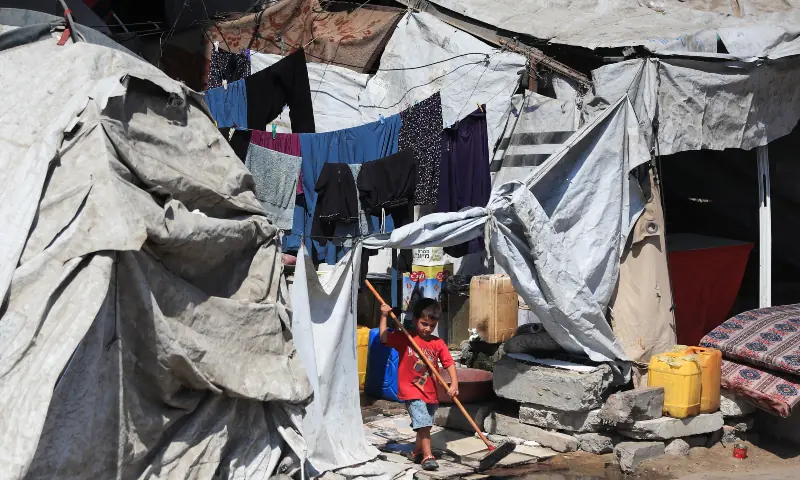
Hamas has reportedly agreed to a deal to disarm, exchanging its weapons for a phased withdrawal of Israeli forces from the Gaza Strip. This development follows over two years of intense conflict, marked by strikes, hunger, and mass displacement for Gazans since Hamas's October 7, 2023 attack on Israel. While Hamas has accepted the plan, which was announced by US President Donald Trump, Israel has not yet officially commented. Displaced teacher Mohammed Hamdouna, 35, expressed a cautious hope that the "world's longest nightmare" might end but remains hesitant to believe it until essential aid and access are restored. He stated that Hamas should have no role in Gaza after the destruction and loss of life. Taxi driver Ahmed Aal, 37, voiced deep distrust in Israel, fearing they will not honor the agreement and will find pretexts to resume fighting. He highlighted the disparity between negotiators and the daily suffering and deaths occurring in Gaza. Umm Naeem Abu Sultan, 55, shared her joy upon hearing news of a truce, likening it to a reopening of life's doors, and hopes for an end to bombardments and the opening of all crossings. Mahmoud Yousef, 28, remains skeptical, believing the news only when tangible results like opened crossings and incoming aid are visible. He questioned the lengthy timeline for implementation, rubble removal, and rebuilding, noting his dependence on humanitarian aid after losing his job at a cafe.
The reported agreement signifies a potential shift in the protracted Gaza conflict, driven by the immense human cost and international pressure. The core challenge lies in the implementation and verification of Hamas's disarmament and Israel's subsequent withdrawal, with historical precedents of mistrust fueling skepticism among Gazan civilians. The economic and humanitarian devastation necessitates a robust, long-term reconstruction strategy, independent of immediate security arrangements. Future stability will likely depend on addressing the underlying political grievances and establishing a durable governance framework for Gaza, ensuring that the cycle of violence is broken through sustainable development and inclusive political processes, rather than solely through military or disarmament measures.
AI-generated to prompt reflection — not editorial opinion, not advice, not a statement of fact. How this works.