Gaza's Beekeepers Face Devastation, Struggling to Revive Industry Amidst War Ruins
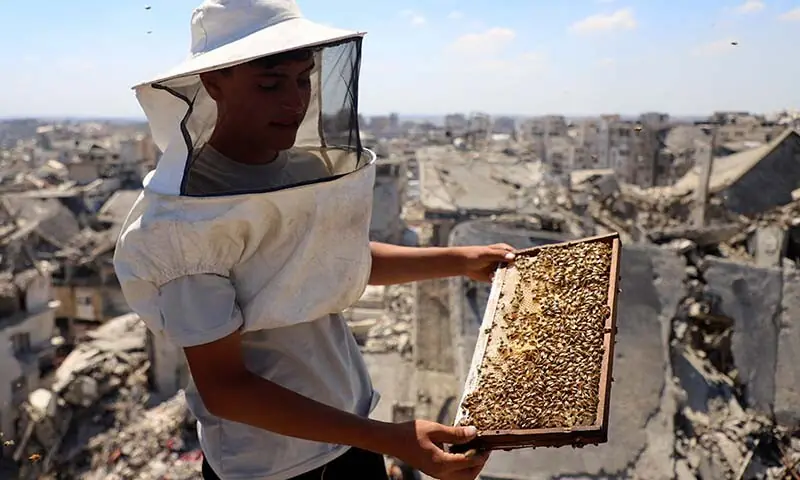
Beekeepers in Gaza are facing immense challenges in rebuilding their livelihoods following years of conflict, which has devastated agricultural fields and destroyed approximately 700 of the 30,000 hives previously maintained. Ibrahim al-Dabba, a beekeeper in Gaza City, highlights the difficulty of raising bees amidst rubble, with limited access to trees and orchards near the Israeli border. Agricultural engineer Rateb Sammour estimates that current honey production is only 10% of pre-war levels, a significant decline from the roughly 400 metric tonnes produced annually several years ago. Climate change had already impacted flowering seasons and reduced honey output to about half, but the conflict delivered a much more severe blow. To sustain their bees, beekeepers are resorting to placing hives on rooftops and supplementing their diet with sugar, as farmland is inaccessible or destroyed. Ibrahim al-Dabba, 49, found almost nothing left of his trade after the ceasefire last October, facing a lack of bees, equipment, and frames. He also noted restrictions on entering agricultural areas within the military demarcation line. The cost of restarting is substantial, with Dabba paying 10,000 shekels (approximately $3,245) for just three hives and essential equipment. In Nuseirat, beekeeper Fahd al-Dahdouh, 32, is actively repairing salvaged hive boxes from destroyed farming areas, collecting and reassembling components like lids, boxes, and flooring.
The destruction of Gaza's beekeeping industry exemplifies the systemic impact of prolonged conflict on specialized agricultural sectors. The loss of infrastructure, access to natural resources, and the displacement of skilled individuals create a cascade of economic and ecological consequences. Beyond the immediate loss of honey production, the decimation of bee populations threatens vital pollination services essential for any remaining agricultural activity and biodiversity in the region. The economic viability of beekeeping is further challenged by the high cost of replacement and the ongoing restrictions on movement and land access, highlighting the complex interplay between security concerns, humanitarian needs, and the long-term sustainability of livelihoods. Future recovery efforts will require not only material aid but also strategic planning to re-establish ecological conditions conducive to beekeeping and ensure the preservation of this crucial pollinator.
AI-generated to prompt reflection — not editorial opinion, not advice, not a statement of fact. How this works.