GE Aerospace Completes World's First High-Altitude Hybrid-Electric Flight
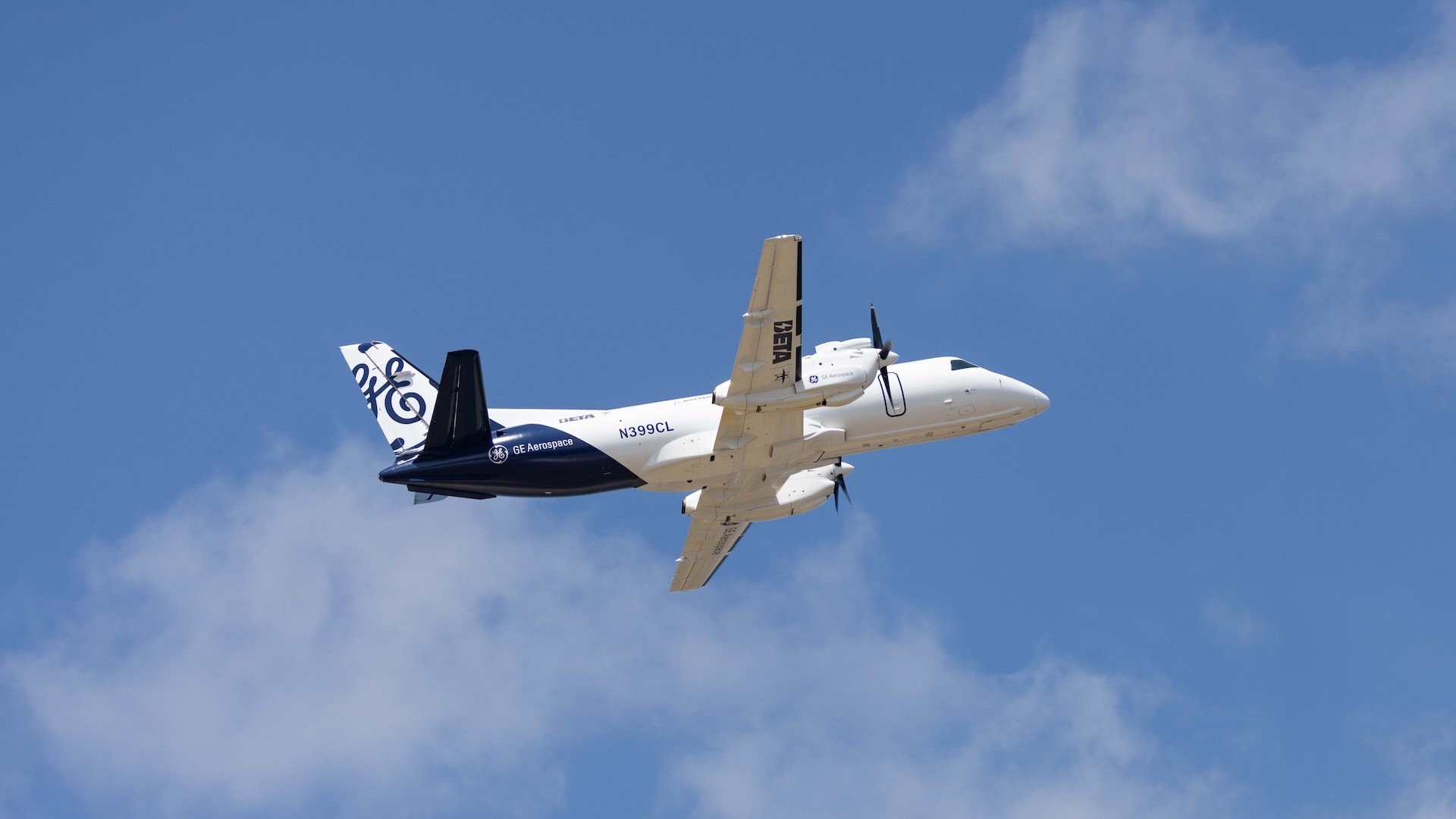
GE Aerospace announced on Monday, May 20th, the successful completion of the world's first high-altitude flight utilizing hybrid-electric propulsion. The two-hour flight reached an altitude of 30,000 feet (9 km) and was conducted using a modified Saab 340 aircraft. This milestone follows extensive testing that began in May, including a multi-stop journey over the Atlantic Ocean. The research is a collaborative effort involving GE Aerospace, NASA, Boeing, and electric aircraft manufacturer Beta Technologies. This development aligns with ongoing industry efforts to design propulsion components for future aircraft, potentially successors to the Boeing 737 and Airbus A320neo. Proponents suggest that hybrid propulsion can enable aircraft to ascend to higher altitudes more rapidly, while also significantly contributing to ambitious goals for reduced fuel consumption and emissions. Hybridization is a key focus within GE Aerospace's RISE (Revolutionary Innovation for Sustainable Engines) engine concept, a joint venture with France's Safran. This concept also explores radical open-fan designs, alongside a more traditional closed-fan alternative known as AD-L or ADNB. Engine manufacturers are now actively demonstrating advancements in fuel efficiency and durability for next-generation engines, anticipated by the end of the next decade. Competitors Pratt & Whitney and Rolls-Royce are also expected to share updates on their respective engine research initiatives shortly.
This successful high-altitude hybrid-electric flight represents a significant step in the aviation industry's transition towards more sustainable propulsion systems. The collaboration between GE Aerospace, NASA, Boeing, and Beta Technologies highlights a multi-faceted approach to innovation, integrating established aerospace giants with emerging electric aviation specialists. The dual benefits of potentially faster ascent to higher altitudes and substantial fuel efficiency gains address critical environmental and operational imperatives. As engine manufacturers race to meet the demands of next-generation aircraft, the competition among GE Aerospace, Pratt & Whitney, and Rolls-Royce underscores the strategic importance and rapid development pace in this sector. The industry is navigating complex technological trade-offs, balancing radical design concepts with proven architectures to achieve ambitious sustainability targets within the next decade.
AI-generated to prompt reflection — not editorial opinion, not advice, not a statement of fact. How this works.