General Ye Win Oo's First 100 Days Under Min Aung Hlaing's Shadow
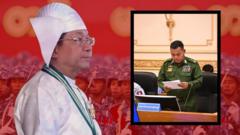
General Ye Win Oo, the new Commander-in-Chief, has spent his first 100 days under the influence of his predecessor, U Min Aung Hlaing. This period has been marked by the continued oversight and guidance of U Min Aung Hlaing, suggesting that General Ye Win Oo's autonomy may be limited. The dynamics of leadership transition within the military structure appear to be heavily shaped by the established authority of the former chief. Observers note that the early tenure of General Ye Win Oo is characterized by operating within the established framework and expectations set by U Min Aung Hlaing. This situation raises questions about the extent of independent decision-making and policy implementation available to the new Commander-in-Chief. The influence of U Min Aung Hlaing is a significant factor shaping the initial phase of General Ye Win Oo's command. The military leadership's succession appears to prioritize continuity and adherence to established norms over immediate shifts in direction. The first 100 days serve as an indicator of the prevailing power structures and the operational environment for the new military chief.
The initial 100-day period for General Ye Win Oo suggests a leadership transition that prioritizes continuity and deference to established authority, specifically that of U Min Aung Hlaing. This dynamic may reflect a strategic approach to maintaining stability within the military hierarchy, potentially at the expense of immediate operational autonomy for the new Commander-in-Chief. Future leadership effectiveness will likely depend on the evolving balance of influence between the incumbent and his predecessor, and the extent to which General Ye Win Oo can assert his own strategic vision within the existing governance framework. The long-term implications for military policy and operational independence will be shaped by how this power dynamic plays out over the next decade, particularly in response to evolving geopolitical and internal security challenges.
AI-generated to prompt reflection — not editorial opinion, not advice, not a statement of fact. How this works.