Geological forces, not just CO2, likely caused Antarctica's early glaciation
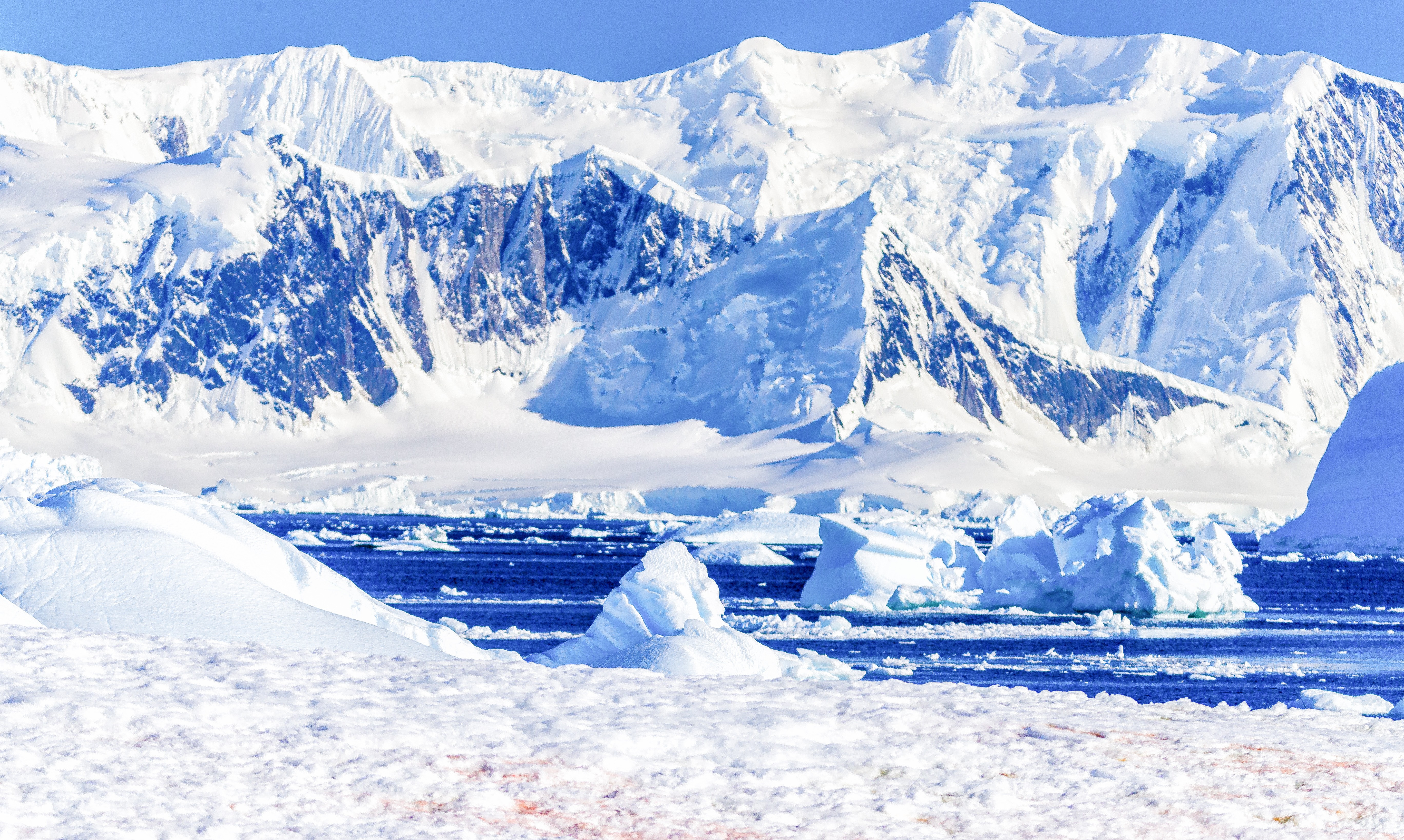
A new study suggests that geological processes, rather than solely atmospheric carbon dioxide levels, were the primary drivers behind Antarctica's glaciation approximately 34 million years ago, occurring millions of years before the Arctic froze. While declining CO2 levels contributed to global cooling, they alone cannot explain why Antarctica glaciated much earlier than the Arctic. The research, published in Science and involving colleagues from the UK and Germany, posits that slow-acting geological forces, specifically "mantle waves" originating from the breakup of the supercontinent Gondwana, played a crucial role. These mantle waves, which occur when hot mantle material rises and cools beneath separating continents, destabilized the Antarctic continent's base. This process led to the uplift of the continent, creating a vast plateau and triggering erosion. Over approximately 100 million years, this uplift migrated inland, eventually raising the Gamburtsev Mountains to altitudes exceeding 2 kilometers. At this elevation, snow could persist through summers, allowing mountain glaciers to form around 45 million years ago. The subsequent growth of these glaciers led to positive feedback loops: increased reflectivity of sunlight by ice further cooled the region, and colder air retained less water vapor, a greenhouse gas, weakening the insulating effect. These combined factors facilitated the expansion of the ice sheet to its current form. This geological uplift mechanism also explains why Antarctic sea surface temperatures remained unexpectedly high for millions of years after glaciation began, as the global cooling wasn't sufficient to drastically chill the surrounding oceans. The study highlights that such continental ice sheet formation requires specific geological conditions and long timescales, and their disappearance can be much faster than their formation.
This research offers a compelling geological explanation for Antarctica's early glaciation, shifting focus from solely atmospheric CO2 to the interplay of tectonic forces and landscape elevation. By identifying the role of mantle waves in uplifting the Antarctic continent and its mountain ranges, the study provides a mechanism for reaching the critical altitude threshold for glaciation independently of global temperature drops. This perspective underscores the profound, long-term influence of deep Earth processes on surface climate dynamics and ice sheet stability. It suggests that geological readiness can precede climatic triggers, leading to asynchronous polar glaciation. Understanding these complex interactions is vital for refining climate models, particularly when projecting future ice sheet behavior under changing global conditions, as the formation and melt rates of ice sheets are shown to be vastly different.
AI-generated to prompt reflection — not editorial opinion, not advice, not a statement of fact. How this works.