Geological uplift, not just global cooling, explains Antarctica's early glaciation
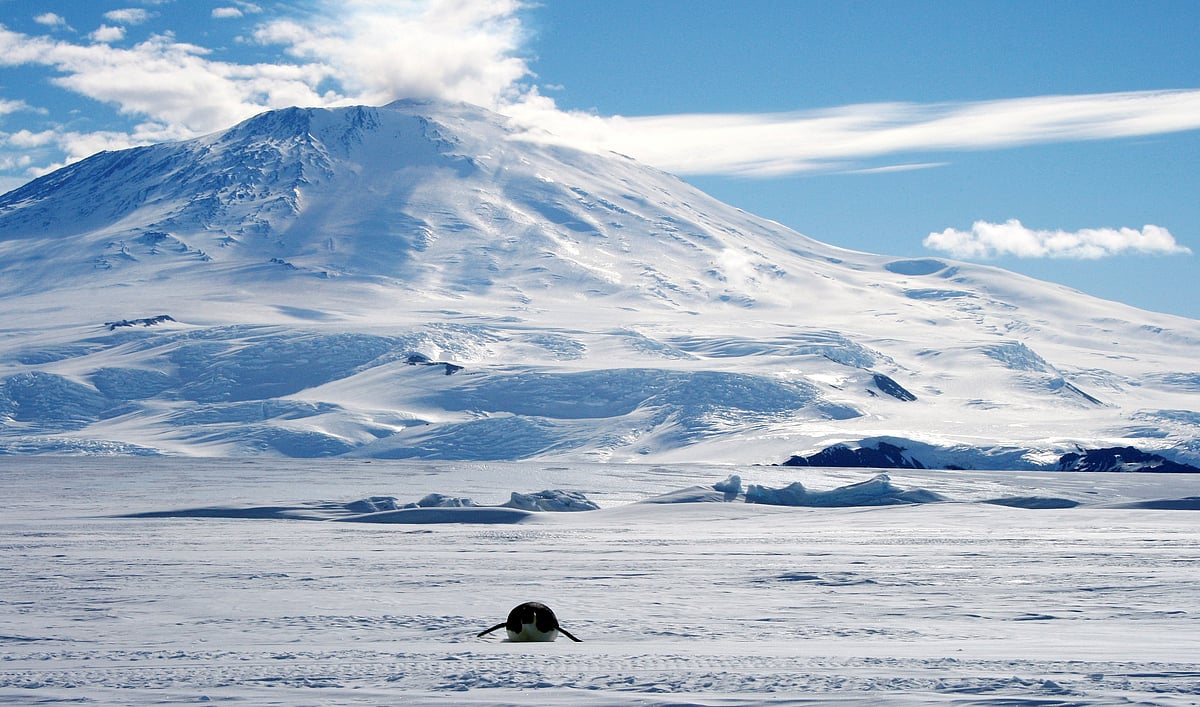
Scientists have identified a key geological factor that led to Antarctica's glaciation approximately 34 million years ago, significantly earlier than the Arctic's freezing. Research published in the journal Science reveals that a powerful geological event caused a mountain range in East Antarctica to uplift. This uplift raised the landmass to an altitude conducive to glacier formation and permanent ice accumulation, even though global temperatures were about 5 degrees Celsius warmer than today. This process occurred at the beginning of the Oligocene epoch, following the Eocene. The uplift was driven by mantle waves, slow-moving disturbances deep within the Earth that occur when continents break apart. These waves shifted dense rocks from beneath the tectonic plate, causing the overlying continent to become lighter and rise. This led to the formation of the Gamburtsev Mountains, an 11,120-foot-high range now buried under ice. The increased elevation created a stable environment for ice to form and persist. In contrast, the Arctic, being primarily an ocean with no significant landmass or mountains, could not accumulate permanent ice until atmospheric carbon dioxide levels dropped considerably, making the air much colder near sea level. This difference in geological structure and elevation explains why the Arctic froze about 25 million years after Antarctica. The study, co-authored by geoscientist Thomas Gernon of the University of Southampton, highlights how changes in land elevation can have profound impacts on climate and nature, independent of global temperature trends.
This research offers a crucial counterpoint to solely attributing polar ice formation to global cooling trends. By emphasizing the role of geological uplift, specifically the formation of the Gamburtsev Mountains, it demonstrates how localized topographic changes can create conditions for glaciation irrespective of broader climatic warmth. This suggests that understanding Earth's cryosphere requires a dual focus: monitoring atmospheric greenhouse gas concentrations and analyzing tectonic and geological processes that alter land elevation. The findings prompt consideration of how future geological shifts, potentially influenced by ongoing mantle dynamics or even anthropogenic activities impacting crustal stability, could interact with projected climate change scenarios. This highlights a system where geological inertia and atmospheric forcing create complex, non-linear outcomes for ice sheet stability over millennial timescales.
AI-generated to prompt reflection — not editorial opinion, not advice, not a statement of fact. How this works.