German Christian Democrat Leader Merz Shows Path to Governing Against Extremes
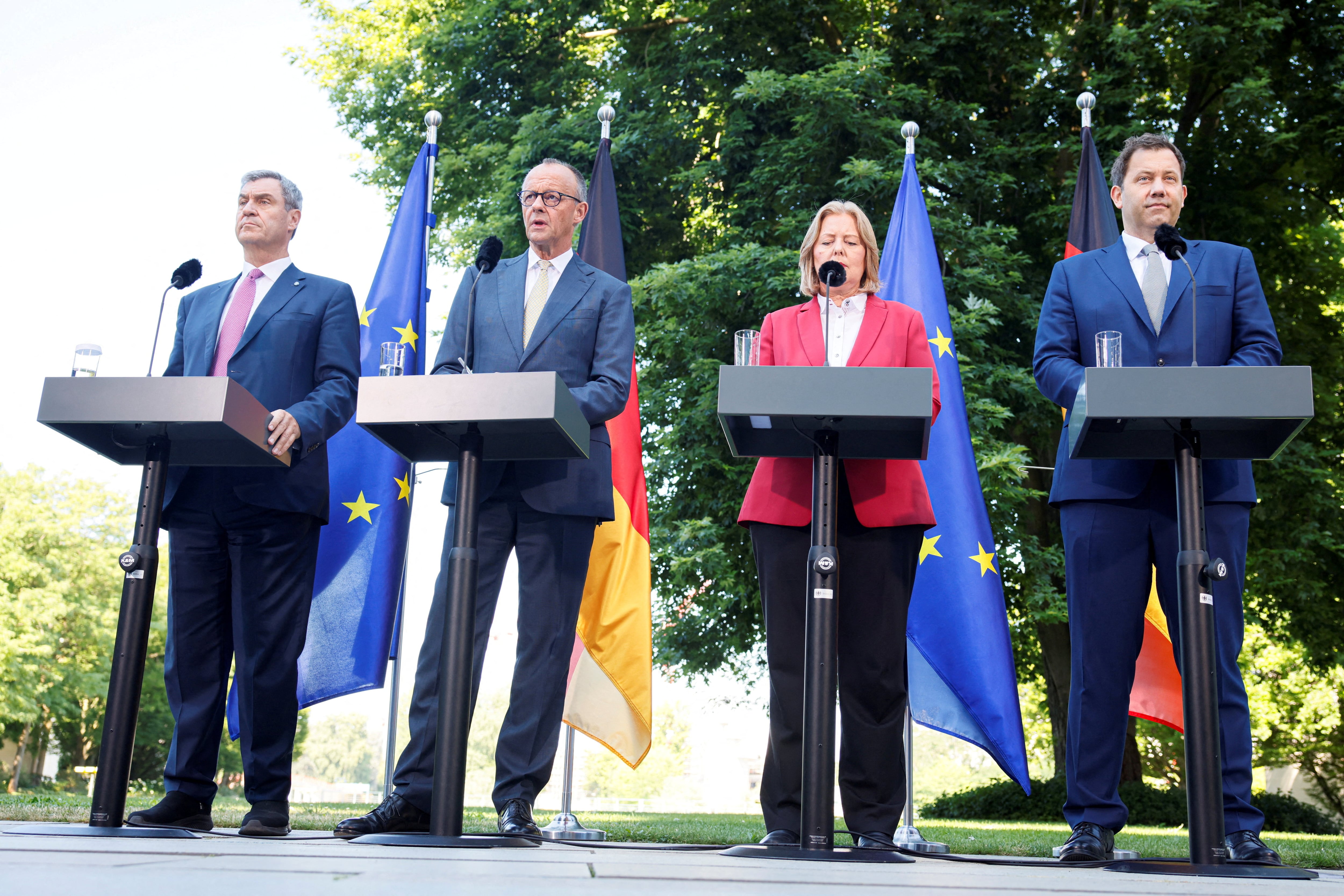
Friedrich Merz, the leader of Germany's Christian Democratic Union (CDU), has demonstrated that it is possible to govern effectively even when facing extreme political factions. His recent agreements with the Social Democratic Party (SPD) highlight a pragmatic approach to coalition-building and policy implementation. This strategy aims to steer a middle course, avoiding the pitfalls of ideological rigidity that can paralyze governance.
Merz's actions suggest a willingness to engage with centrist parties to achieve stability and progress, rather than succumbing to the pressures from the far-left or far-right. This approach is crucial in a political landscape often characterized by fragmentation and polarization. By finding common ground with the SPD, Merz is signaling a commitment to pragmatic solutions that can address the country's challenges.
Friedrich Merz's demonstrated ability to forge agreements with the SPD, despite ideological differences, showcases a strategic pivot towards pragmatic governance in Germany. This approach seeks to navigate the complexities of a polarized political environment by emphasizing consensus-building over ideological purity. Such a strategy, if sustained, could foster greater political stability and enable more effective policy execution. It highlights the ongoing tension between ideological positioning and the practical demands of governing, particularly in a multi-party system where compromise is essential for legislative progress. The long-term implications of this collaborative model will depend on its capacity to address pressing national issues while managing internal party dynamics and public expectations.
AI-generated to prompt reflection — not editorial opinion, not advice, not a statement of fact. How this works.