German Conservative Leader Resigns Over Surrogacy Controversy
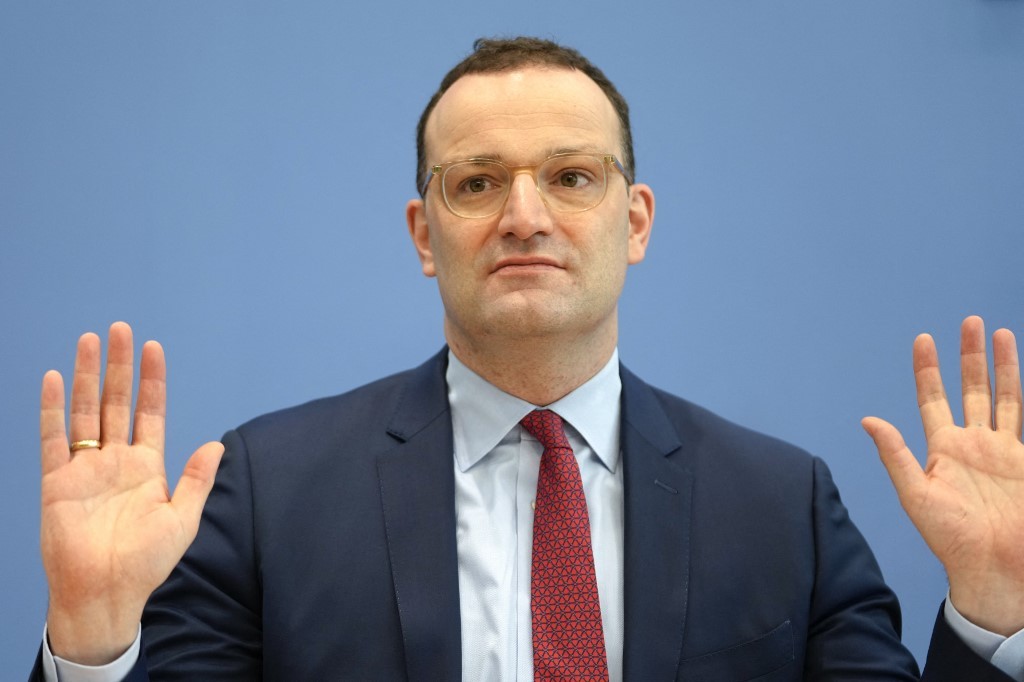
Jens Spahn, the leader of Germany's conservative CDU/CSU parliamentary group, has resigned from his position following internal party backlash over his use of surrogacy in the United States to have a child. Surrogacy is prohibited in Germany, a stance the CDU party officially upholds. Spahn stated that his personal happiness in starting a family with his husband was incompatible with his political role. He acknowledged that balancing his personal decision with the expectations of his leadership position proved more challenging than anticipated. Chancellor Friedrich Merz described Spahn's resignation as "fair and inevitable," emphasizing that "credibility is the most precious asset in politics." Merz also indicated no intention to change German law on surrogacy or the CDU's opposition to the practice. The controversy erupted after German media reported that Spahn and his husband had recently become parents through a surrogate in the U.S., with the surrogate reportedly four months pregnant at the time of a key CDU congress in February. Opposition parties criticized Spahn, with one leader from Die Linke accusing him of hypocrisy and a "double standard," suggesting that laws are circumvented by wealthy officials. Spahn, who previously served as Health Minister under Angela Merkel, was a prominent figure on the CDU's right wing, advocating for stricter immigration policies. Several CDU officials had called for his resignation, deeming his position untenable.
This event highlights a significant tension between personal autonomy and adherence to party platforms, particularly within conservative political structures. Spahn's decision to utilize surrogacy abroad, while legal in the U.S., directly conflicts with the CDU's established policy against the practice, creating an optics challenge and raising questions about leadership integrity and consistency. The situation underscores the evolving societal norms around family formation and reproductive technologies, which may outpace the legislative and ideological frameworks of established political parties. From a systems perspective, the CDU faces a governance dilemma: how to reconcile its core principles with the diverse personal choices of its members and the broader public, especially when those choices are enabled by cross-border legal and technological access. This incident may prompt internal reflection within the CDU on the adaptability of its platform and the potential for future policy shifts, or conversely, a reinforcement of its traditional stance to maintain ideological cohesion.
AI-generated to prompt reflection — not editorial opinion, not advice, not a statement of fact. How this works.