German far-right AfD re-elects leadership amid protests and internal rifts
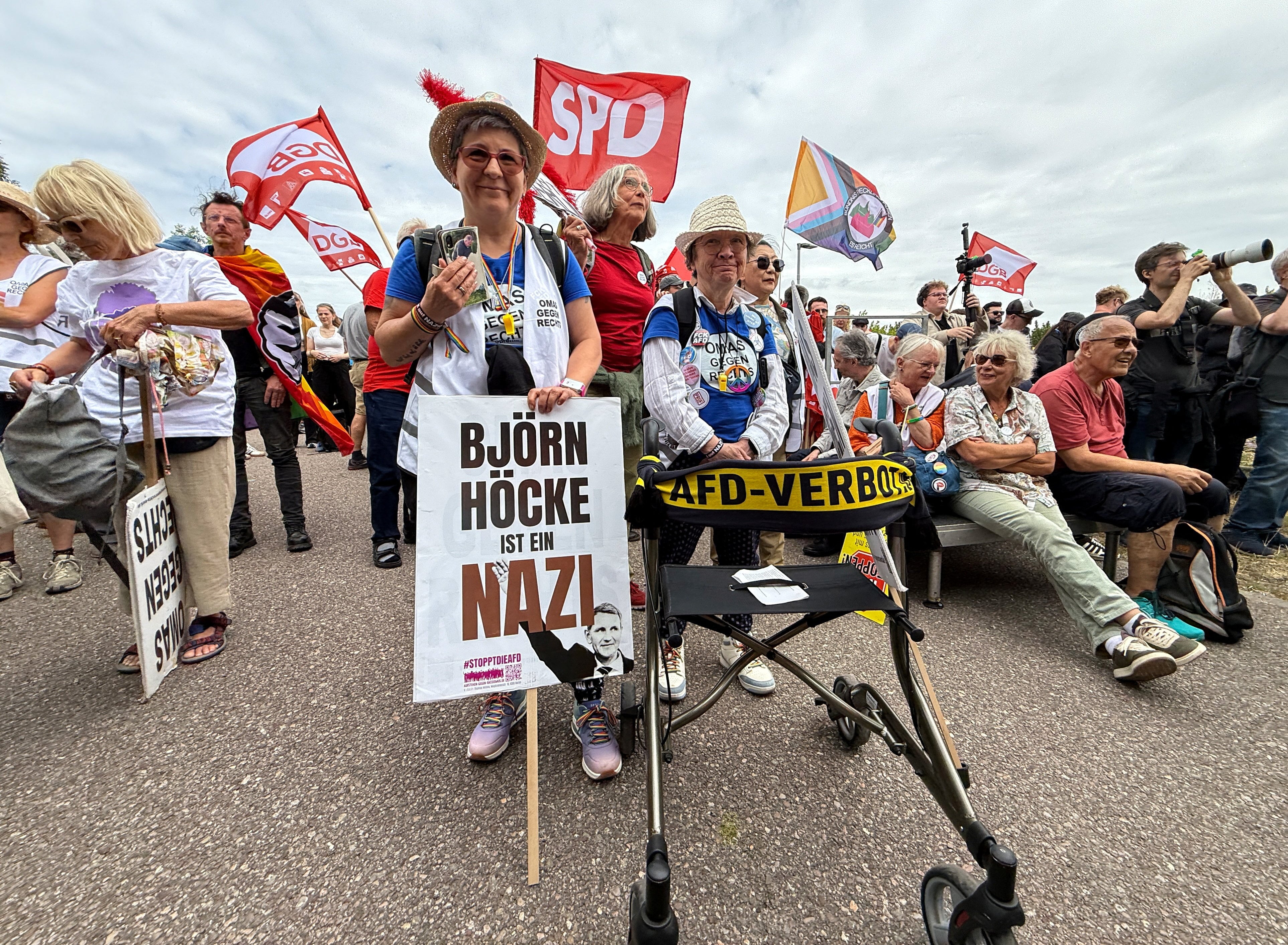
The German far-right party Alternative for Germany (AfD) has re-elected Alice Weidel and Tino Chrupalla as its co-leaders at the party's congress in Erfurt. The congress was met with significant protests against the party, highlighting public opposition to its policies and ideology. Despite the external pressure and ongoing internal rivalries, Weidel and Chrupalla reaffirmed their political objectives. Their stated aim is to first gain a strong foothold in eastern Germany and subsequently challenge for control of the federal government. The re-election of the current leadership suggests a continuation of the party's current strategic direction. However, the strong public protests indicate a significant challenge in achieving broader acceptance across Germany. The internal dynamics of the AfD, while not detailed, are implied to be a factor influencing the party's proceedings.
The AfD's re-election of its leadership amidst public protests and internal divisions underscores the party's strategic focus on leveraging regional strongholds, particularly in eastern Germany, to achieve national political influence. This approach reflects a common tactic for parties seeking to overcome broader electoral skepticism by consolidating support in more receptive areas before attempting a national breakthrough. The juxtaposition of internal party cohesion around leadership with external public dissent highlights a potential governance challenge: how to translate a committed base into widespread public mandate. Looking ahead, the AfD's trajectory will likely be shaped by its ability to navigate these internal and external pressures, particularly in the context of evolving geopolitical and economic landscapes that may influence voter sentiment towards nationalist and populist platforms.
AI-generated to prompt reflection — not editorial opinion, not advice, not a statement of fact. How this works.