Germany: Far-right AfD confirms leaders amid anti-fascist protest
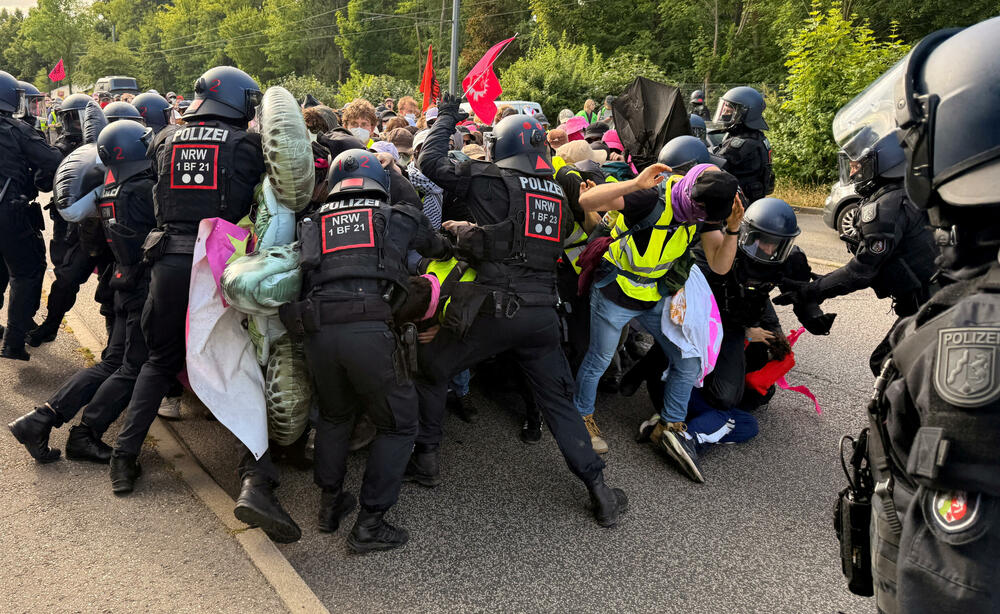
The far-right Alternative for Germany (AfD) party has confirmed its leaders during a convention, facing opposition from anti-fascist groups. Lena Raupah, spokesperson for the anti-fascist alliance "Widerstand" (Resistance), stated that her group aimed to disrupt the AfD convention. Raupah criticized the AfD's policies, asserting that they engage in "fascist politics" and advocate for "mass deportations and street terror" while failing to address genuine societal issues. She further argued that the AfD's agenda primarily benefits the wealthy rather than ordinary citizens. The protests highlight ongoing tensions and ideological divides within Germany regarding the AfD's political platform and its perceived impact on society.
The AfD's leadership confirmation amidst anti-fascist demonstrations underscores a persistent ideological conflict in German politics. The "Widerstand" group's critique frames the AfD's platform as detrimental to the general populace and a threat to social order, focusing on concerns about deportations and alleged "street terror." This perspective suggests that the AfD's economic policies may disproportionately favor affluent segments of society, potentially exacerbating existing inequalities. As political discourse intensifies, understanding the underlying economic incentives and governance structures that shape such party platforms will be crucial for navigating Germany's future political landscape and ensuring inclusive policy-making.
AI-generated to prompt reflection — not editorial opinion, not advice, not a statement of fact. How this works.