Germany's Historical Guilt: Why Focus on Russia's Suffering?
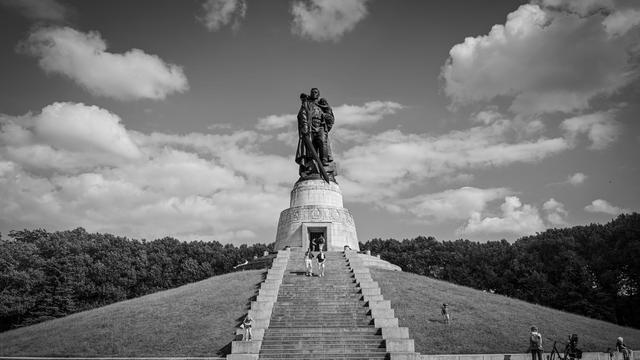
Germany waged a criminal war against the Soviet Union, yet historical remembrance predominantly focuses on Russia rather than the other constituent republics. This raises questions about the selective nature of collective memory regarding World War II atrocities.
The war of aggression by Nazi Germany against the Soviet Union resulted in immense suffering and loss of life across its diverse territories. However, contemporary German discourse and memorialization efforts often center on Russia's experience, potentially overshadowing the distinct historical narratives and traumas of Ukraine, Belarus, the Baltic states, and others.
This selective focus prompts an examination of why Russia has become the primary referent for German historical guilt concerning the Eastern Front. It invites a deeper understanding of how historical narratives are constructed, maintained, and potentially revised over time, and what implications this has for contemporary German-Russian relations and broader European historical consciousness.
The historical narrative surrounding Germany's war crimes against the Soviet Union presents a complex interplay of geopolitical realities and evolving memory politics. While Russia, as the successor state to the USSR, holds a significant position in this narrative, focusing solely on Russia may overlook the distinct and profound suffering experienced by other Soviet republics, such as Ukraine and Belarus. This selective emphasis could stem from various factors, including Cold War dynamics, contemporary geopolitical alignments, and the sheer scale of Russian casualties. A more comprehensive approach to historical remembrance would acknowledge the multifaceted nature of the Soviet experience and the individual traumas of its constituent nations. Such an approach could foster a more nuanced understanding of shared history and potentially contribute to more equitable reconciliation efforts across Eastern Europe, recognizing that the legacy of the war impacts multiple nations distinctly.
AI-generated to prompt reflection — not editorial opinion, not advice, not a statement of fact. How this works.