Ghostly Deep-Sea Fish Filmed for First Time, Expedition Discovers New Hydrothermal Fields
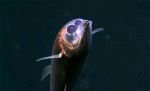
An Atlantic expedition has captured unprecedented footage of a rare deep-sea creature, Winteria telescopa, also known as the ghost fish. The expedition documented an intact specimen of this elusive fish, which is characterized by its transparent head and unusual appearance. This marks the first time this species has been filmed in its natural habitat. In addition to the remarkable fish sighting, the researchers also discovered two previously unknown hydrothermal fields. These newly found fields are teeming with diverse marine life, highlighting the rich biodiversity of the deep ocean. The expedition's findings contribute significantly to our understanding of deep-sea ecosystems and the unique adaptations of life in extreme environments. Further study of these hydrothermal fields is expected to reveal more about the complex interactions and species present in these unexplored regions of the Atlantic.
This deep-sea exploration highlights the ongoing potential for significant biological and geological discoveries in Earth's largely uncharted oceans. The documentation of Winteria telescopa, a species rarely observed, underscores the importance of continued investment in deep-sea research and technology. The discovery of new hydrothermal fields, particularly those supporting abundant life, suggests that such ecosystems may be more widespread than currently understood. Future research will likely focus on the unique biochemical and genetic adaptations of organisms thriving in these environments, potentially offering insights into extremophile biology and novel biotechnological applications. Understanding the distribution and characteristics of these deep-sea oases is crucial for assessing their role in global biogeochemical cycles and for developing effective conservation strategies in the face of potential future resource exploitation.
AI-generated to prompt reflection — not editorial opinion, not advice, not a statement of fact. How this works.