Giant Anaconda Rescued From Fishing Net in Brazil's Pantanal Wetlands
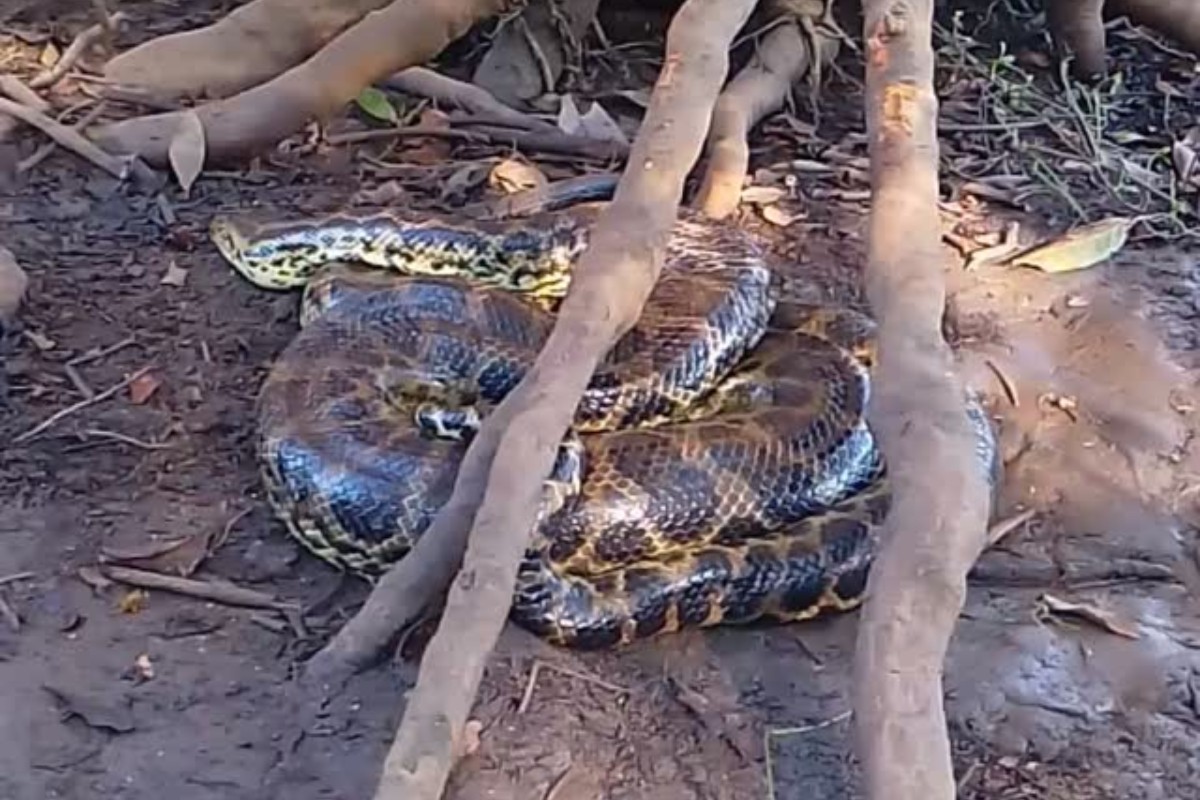
A yellow anaconda, approximately 2.5 meters long, was rescued after becoming entangled in an abandoned fishing net along the banks of the Rio Salobra in the Pantanal region of Miranda, Brazil. The rescue was performed by a group of tourists accompanied by their guide, Nadir Silva, during a boat tour. Nadir captured the event on video, showing the snake coiled near the riverbank, ensnared by the old fishing gear. He stated that the anaconda had likely been trapped for at least two days and that the net had already caused injuries to its body. Using a knife, Nadir and another pilot cut through the fishing net's threads to free the reptile. The snake remained calm after being freed, allowing the tourists to observe and photograph the outcome. Nadir emphasized the importance of environmental preservation and respect for the Pantanal's wildlife, noting that the group felt compelled to save the snake as they would any other animal. Later, upon returning from their tour, the team observed that the anaconda had moved on and returned to its natural habitat. The rescue occurred in a crucial area for biodiversity, with the Rio Salobra being a significant ecological corridor in Mato Grosso do Sul, flowing near the Serra da Bodoquena National Park before joining the Rio Miranda. The yellow anaconda (Eunectes notaeus) is a non-venomous species native to the Pantanal, typically measuring between 2.4 and 4.6 meters, and it kills prey through constriction.
This incident highlights the direct impact of abandoned fishing gear on wildlife, a common issue in aquatic ecosystems globally. While the rescue itself is a positive outcome, it underscores the broader challenge of managing human-generated waste in protected natural areas like the Pantanal. The guide's actions demonstrate a commendable commitment to conservation, but the presence of the net indicates a lapse in responsible tourism or local practices. Future efforts should focus on preventative measures, such as stricter regulations on fishing equipment disposal and increased environmental education for both tourists and local communities. Addressing the root cause of such pollution is crucial for the long-term health of biodiversity hotspots and mitigating risks to species like the anaconda, which are vital to the ecological balance of the Pantanal.
AI-generated to prompt reflection — not editorial opinion, not advice, not a statement of fact. How this works.