Giant Arapaima Parents Use Survival Tactic to Protect Young in Brazilian River
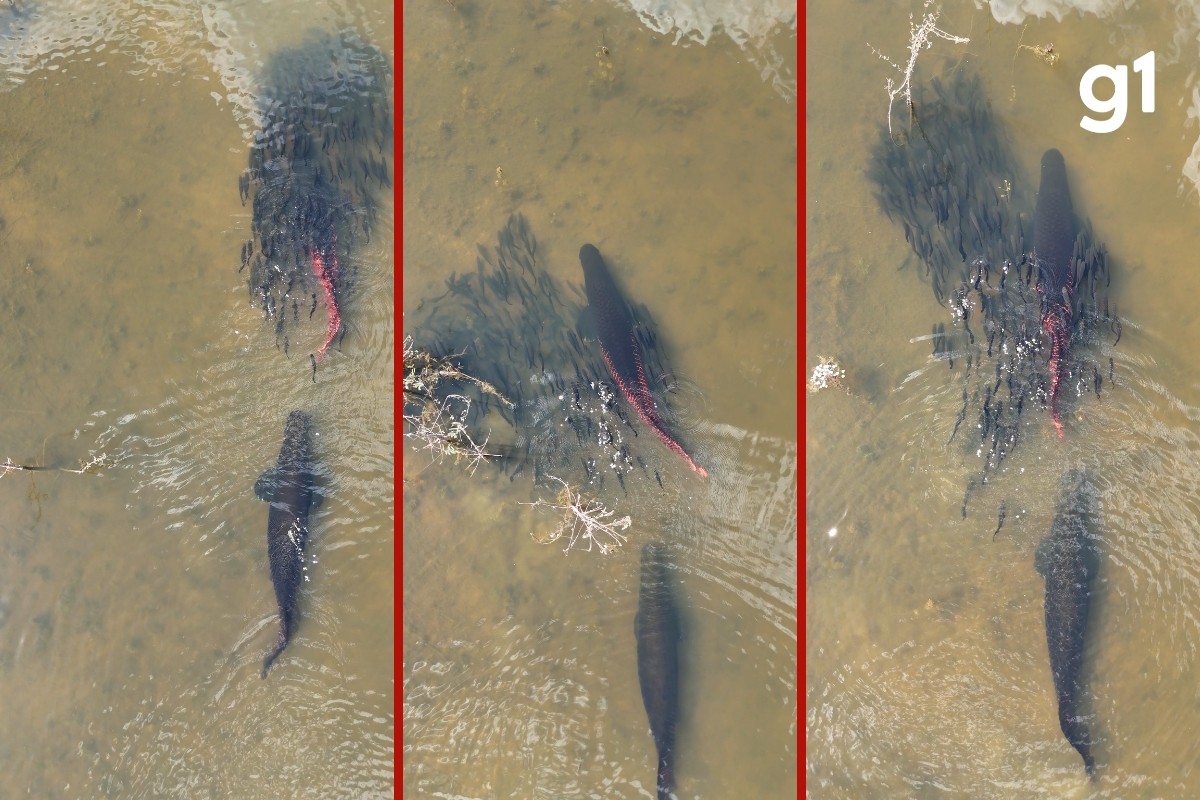
A pair of giant arapaima fish were observed guiding numerous young fish through the waters of the Teles Pires River in Porto Santo Expedito, Itaúba, Mato Grosso, Brazil. The remarkable sighting was captured on video by fisherman and influencer Tiger Bilzerian on Friday, February 24th, and has since gone viral, with the original post exceeding 3 million views. Bilzerian explained that arapaimas swim in shallow waters as a survival strategy to shield their offspring from predators like the wolf fish, giant otters, and caimans. He noted that this particular couple appeared to be exceptionally successful, as a significant number of young arapaimas were still alive and swimming with their parents. Typically, only about 50 young fish survive the journey, depending on the habitat, but this pair seemed to have a highly effective method. Beyond natural predation, the arapaima is also highly sought after by fishermen for its lean, fatty meat, which is considered a delicacy and is believed to have anti-inflammatory properties that may help lower cholesterol and triglyceride levels. The arapaima, recognized as one of the world's largest freshwater fish and the largest scaled fish in the Amazon, has been classified as an invasive exotic species outside its native Amazonian biome. In March of this year, the Brazilian Institute of Environment and Renewable Natural Resources (Ibama) authorized the fishing of arapaima in ten river basins to control the species' population in various Brazilian watersheds. Ibama identifies the arapaima as an apex predator with opportunistic feeding habits, capable of occupying diverse aquatic niches, which raises concerns about its potential impact on local fish populations in areas where it is not native, prompting calls for control measures.
This observation highlights a remarkable natural behavior, showcasing the arapaima's sophisticated parental care and survival instincts in the face of predation. The video's viral success underscores public fascination with wildlife and nature's resilience. From a conservation and ecological perspective, the arapaima's classification as an invasive species in non-native basins, as noted by Ibama, presents a complex management challenge. Balancing the control of potentially disruptive invasive populations with the cultural and economic value of the species, particularly its fishing, requires careful, data-driven policy. Future management strategies will need to consider the long-term ecological impacts and the effectiveness of current control measures, potentially exploring sustainable fishing quotas or habitat management to mitigate negative consequences while acknowledging the species' inherent biological adaptations.
AI-generated to prompt reflection — not editorial opinion, not advice, not a statement of fact. How this works.