Giant Camafeu Weighing Nearly 13 Kilos Aims for World Record
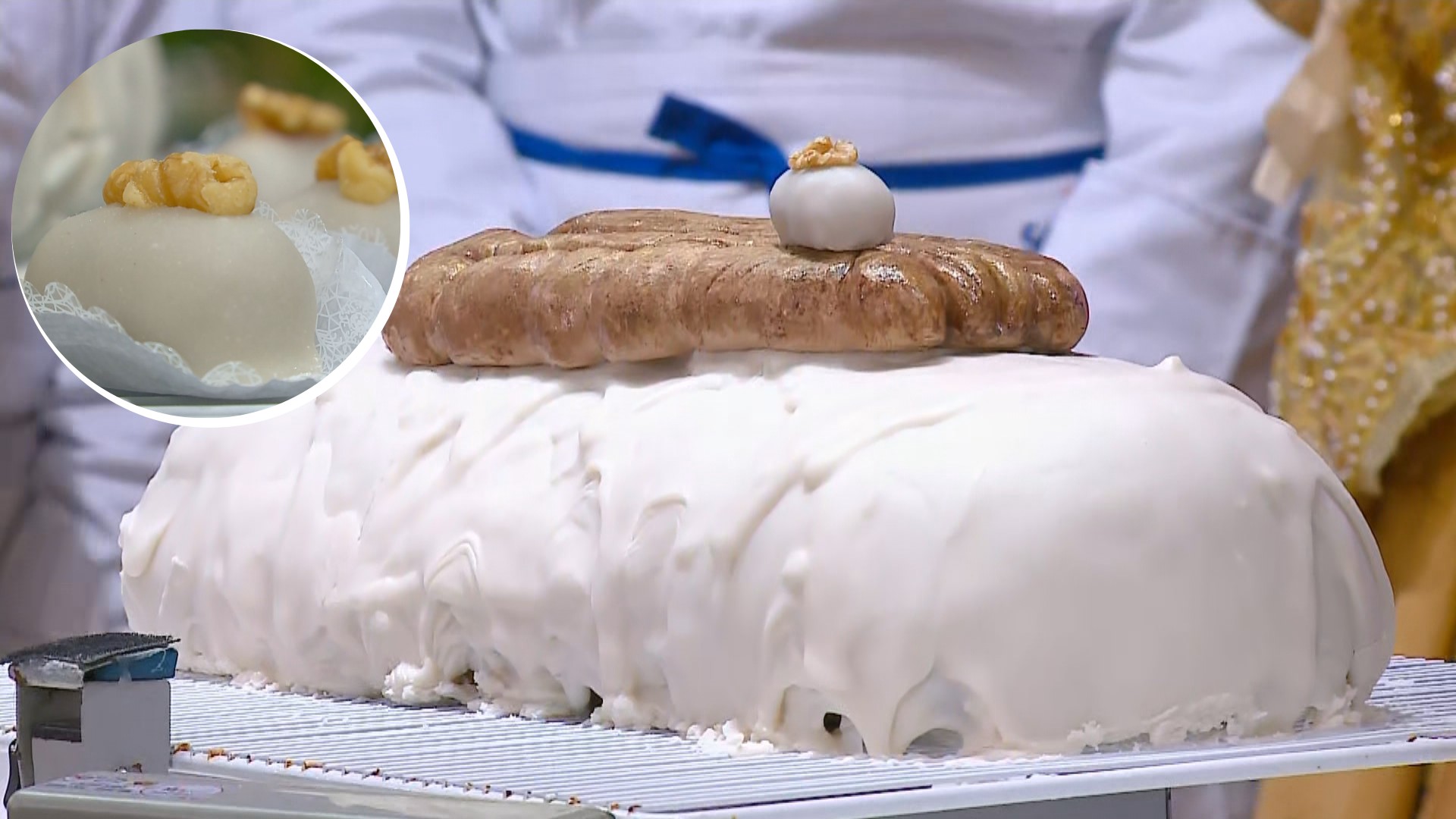
A traditional Brazilian sweet, camafeu, has been recreated on a monumental scale in Pelotas, Rio Grande do Sul, weighing nearly 13 kilograms and featuring 90 egg yolks. This oversized version was presented at the National Sweet Fair (Fenadoce) with the ambitious goal of becoming the largest camafeu ever produced. The creation was the result of over five days of work by a team from the National Commercial Learning Service (Senac). Initially, the team aimed for a five-kilogram sweet, but the final product significantly exceeded expectations. The camafeu, known for its jewel-like appearance and made with walnuts, egg yolks, and sugar, is a symbol of Pelotas' confectionery tradition. To achieve the giant size, ingredients were multiplied; while a standard 40-gram camafeu uses six egg yolks, this version required 90. Preparing the walnut flour alone took approximately six hours, with the team manually grating the nuts to control fat concentration and prevent the sweet from becoming greasy. The sweet was then coated with over two kilograms of fondant made with sugar. According to Senac's teaching chef, Raquel Marasca, the camafeu was chosen to honor the city's female confectioners, symbolizing a jewel as a gift. The team is now pursuing official recognition for this record-breaking sweet in a record book, with Senac's gastronomy coordinator, Bryan Chaplin, confident that no camafeu exceeding 12.6 kilograms has been made before.
This event highlights the cultural significance of traditional foods and the human drive to achieve recognition through scale and innovation. The creation of a record-breaking sweet demonstrates a community's pride in its heritage and its capacity for collaborative effort. From a systems perspective, such endeavors can stimulate local economies through tourism and media attention, while also serving as a platform for culinary education and skill development, as exemplified by the Senac team's involvement. The pursuit of a world record, while seemingly a simple feat of engineering and culinary skill, underscores broader societal values placed on achievement and memorialization. Future considerations might involve exploring the sustainability of such large-scale food production and its potential for waste reduction, aligning with evolving global priorities.
AI-generated to prompt reflection — not editorial opinion, not advice, not a statement of fact. How this works.