Giant Otter Filmed Devouring Large Cachara Fish in Brazil's Pantanal
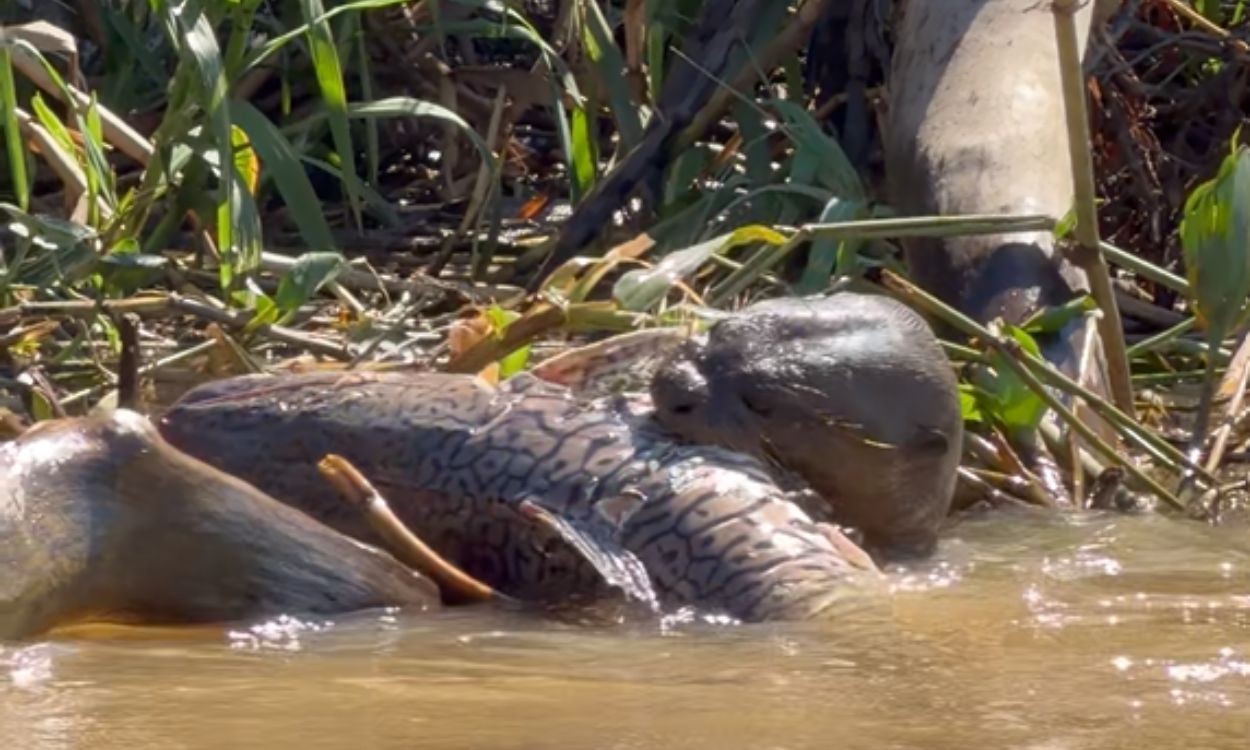
A rare and remarkable wildlife sighting occurred in Brazil's Pantanal region when a giant otter (Ariranha) was filmed capturing and consuming a large cachara fish. The event took place along the Três Irmãos River, near Porto Jofre in Poconé, Mato Grosso, and was documented by public servant and tour guide Lyessa Scarlet during a boat tour. Scarlet, who has been visiting the Pantanal since 2017, described the scene as surreal, stating she had never witnessed an otter catch a cachara of such significant size before. She observed the otter for hours as it fiercely protected its catch from other otters attempting to approach. The cachara is identified as one of the largest catfish species found in the Paraguay River basin. While the visual was striking, experts confirm this behavior is natural for giant otters, which are apex predators in aquatic environments. Caroline Leuchtenberger, president of the Giant Otter Project and co-chair of the IUCN Otter Specialist Group, explained that while otters typically prey on smaller, more abundant fish like piranhas and traíras, they are opportunistic hunters. They will seize larger prey, such as a debilitated, distracted, or stranded cachara, especially when river levels are low and fish are in shallower waters. The video highlights the otters' efficiency as hunters, aided by their physical adaptations and social hunting strategies, which can involve cooperative efforts to corner schools of fish. Beyond their impressive predatory displays, giant otters play a crucial role in maintaining the ecological balance of Pantanal's aquatic ecosystems by regulating fish populations and serving as indicators of environmental health, requiring pristine river conditions to thrive.
This footage captures a natural predatory event within the Pantanal ecosystem, illustrating the ecological role of giant otters as apex predators. The event underscores the opportunistic feeding strategies of these animals, which adapt to available prey, including larger fish like the cachara, particularly when environmental conditions, such as fluctuating water levels, create opportunities. The otter's defense of its catch highlights typical social dynamics within family groups, where resource competition can occur. From a conservation perspective, the presence of healthy giant otter populations, capable of taking down substantial prey, indicates a robust aquatic environment. Their sensitivity to pollution and reliance on intact river systems makes them valuable bioindicators, signaling the overall health and stability of the Pantanal's biodiversity for the coming decade, especially as climate change impacts water availability and aquatic habitats.
AI-generated to prompt reflection — not editorial opinion, not advice, not a statement of fact. How this works.
